Episode 006
Coach Brandon Lechtenberg
Head Football Coach, Millsaps College
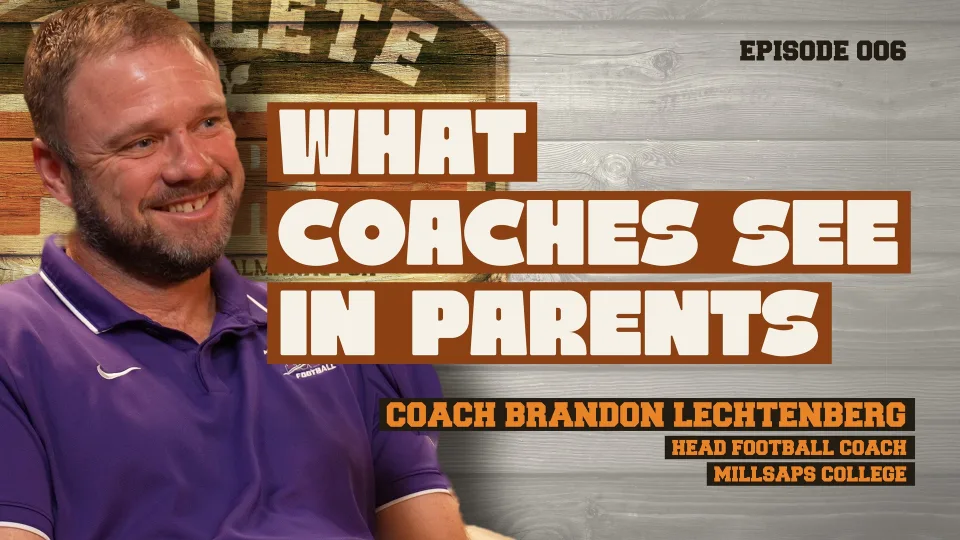
Coach Brandon Lechtenberg is the head football coach at Millsaps College, a Division III program in Jackson, Mississippi, where he inherited a 1-9 team. A father of three, he says chasing a scholarship through travel sports will not get one, and that blaming a high school coach for weak promotion is a myth.
Full transcript
0:00Mike Frascogna: Hey welcome to Athlete Farm your parenting almanac for growing college athletes I'm Mike Frascogna III and today I I have as my guest, Coach Brandon Lechtenberg, the head football coach at Millsaps College in Jackson, Mississippi. Millsaps is an NCAA Division III school. Coach is in his third season now at Millsaps. I know you had a previous tour of duty there, but you're back as the head coach. You're in your third season. He inherited a 1 -9 team, and you got him on a run right now. And so hopefully that's going to continue for the rest of the year. You've got a big game this weekend. Ken. Appreciate you making time to be here during that. He's done a great job of already turning that program around in his third year. He's also the father of three young athletes. So as I always say, we challenge the guests who are coaches and also have kids. You have to put your money where your mouth is. Whenever you're preaching to your team, you now got your own and you better walk the walk if you're talking the talk. So it's kind of a new challenge there. You got younger ones that are just now coming up so you're starting to get into some youth sports I appreciate you being here thank you let's start you're from butte nebraska not necessarily a pipeline going from butte to jackson mississippi but here we are and so tell me tell me about growing up there I know you played eight man football you got a whole truckload of brothers and sisters what was what What was your youth sports experience like in Butte?
Brandon Lechtenberg: My youth sports experience, and this was probably similar to yours, it was before you had all the select teams and the travel teams and all that stuff. You had your local little league team. And if you had a basketball or a football coach that wanted to get some pipeline stuff going at the younger age, then you had those opportunities to participate in. But the youth sporting world was far less organized. recognized back this was the late 80s early 90s Butte Nebraska is a very small town it's about 500 people so it was a small high school I had 19 kids in my graduating class I believe now it was also a very good time to be growing up there we had really good football teams really good basketball teams we won a couple state championships it was during the the 90s when Nebraska was rolling as a football program we were one of the best college football programs in the country during that stretch of the 90s, three national titles, I believe. So that all fueled a desire to be around sports and to play sports and to do those things. And we grew up on a farm outside of town. So a lot of our, I mean, the reality was it was playing baseball with myself, throwing a ball, throwing pop -ups, or playing football games with my brothers. I had six brothers. There were six boys and two girls in my family. I kind of grew up with five brothers, and the two girls came behind. So the only youth sport that we had was baseball, and I think my dad coached or some other local dads coached, and it was as you got into Little League, as you played Tuesday, Thursday night games, and you practiced on Saturday because that's when dads didn't have to work, and the rest of it was playing pickup ball with your buddies. It was after school, going to find a yard to play baseball in. We had the jam ball courts at the local church where you can lower the hoops down and that was a big thing so you there'd be depending on how old you were the high school kids would dominate it for a while and then and then when us younger guys had a chance we go go lower that thing down but a lot of it was unorganized play which looking back retrospectively I think that's an area that I think there's a lot of positive with the organization of you sports now there's also a lot of positive with kids just going out and playing and figuring the rules out on their own and solving fights on their own and and you know getting their feelings hurt because they lost and this
3:56Mike Frascogna: is a reoccurring theme of of the structured versus unstructured and I don't know I tend I tend to agree with you the unstructured play was important there was even for just conflict resolution yeah you know like like you said it's you had to deal with it there wasn't an adult there to to sort it out you had to deal with it you had to come up the rules to the game you're playing with kids especially where you're growing up you're not playing against a bunch of kids your age there's not enough kids your age to play against you're playing it's older kids and that's just a very different dynamic than hey I'm I'm going to my speed coach today yeah working one -on -one that's great too but I don't know that it's I don't know know that we've gotten better for what we've traded for yeah
Brandon Lechtenberg: and and I've I've got my brothers and sisters they've all got kids that have gone through youth sports and I think the oldest we had a couple of them graduated high school now so they're they're kind of on the back end of that but they they they're from all ages from my kids age of five all the way up to graduating from high school this year so we've had a lot of conversations over the years about involvement in youth sports and and how it's different from what we grew up in and and there's there's a lot of there's finding that balance is hard because I think one year I got a brother with two or two of my nephews really talented young boys and they were playing select baseball travel baseball I think one year their mom and dad decided hey you know what we're gonna we're gonna play the local little league this year and not commit so much time and energy to being on the road and they did that and the problem I found was that everyone that was talented was playing the select leagues, and now there was such a big talent differential that they didn't get any fun out of that. And I get that because when I was growing up and when you were growing up, there was no everyone was playing the little league. Everyone was playing in the local league. That was the only league. Yeah.
5:56Mike Frascogna: There was just one league.
Brandon Lechtenberg: And I think one of the biggest positive to that it's there was a lot of play and very little work it made it easy to fall in love with the game because no one was making you hey we got to go play seven games this weekend it was hey your buddies called and we're going out to play a game of pickup basketball or we're playing football when my older brothers were playing football me and my buddies were in the end zone playing football in the end zone during their game that
6:28Mike Frascogna: coach that is a phenomenal point that you just made that I have not heard yet and I think I think you really nailed something there it cultivated the love of the game because it was all about just playing there was no you're being judged there's performance you're being critiqued you're just you're just playing it for the fun of it you may be doing everything wrong for I mean for all you know but you're playing it because it's fun and to be a great athlete long term I always say the obvious thing well you've got to to stay in the game well why do you stay in the game well you stay in the game long term because you like it yeah and it's fun but what if it was never fun you exit and then how good are you long term well you're not because you're not playing yeah so I I think that's a great point I hadn't heard it put that way yet but that unstructured play no supervision is where you think you cultivate the love of the game
Brandon Lechtenberg: yes I absolutely think so and I think there's said that the The challenges with the structured side of it, with the more organized side of it, too, is at what point are you, as parents, as coaches, encouraging play and encouraging the love of the game, and at what point are you trying to make sure that you win and encourage – and you need both those things. You should be encouraging competitiveness. But if competitiveness means that five kids aren't ever seeing the diamond or the court or the field, well, their love of the game is probably not very strong if they're just watching and there's I don't know what that answer is there's there's a certain age certainly by the time you get to high school where it should be about winning games too and not everybody plays the role they want to play but I don't know where that I think sometimes that can factor in too early where hey it's more about winning than it is about cultivating the love and and I think you also want to cultivate the competitiveness you want to compete you want to cultivate the lessons that come with hey maybe it's not my time this isn't my role on the team but there's a very gray area between driving someone away from the game and making someone want to be competitive and understanding hey maybe my role is to run down on kickoff it's not to be the starting wide receiver my role is to understand what your role is in those things and football has a probably a bigger challenge than baseball and basketball and some other sports do, soccer, because think about being a kid. And I've talked to another one of my brothers about this. His kids are a little bit more in the youth football right now, and he's coached at times, and I think this year he's taken a step back from coaching it. And his kids play the skill positions, but I'm a little leery as a football coach about having third graders play organized 11 -on -11 football versus flag football. football yeah who wants to be the center when they're in the third grade who sure who wants to be the the left tackle when they're in the fourth or fifth grade and does that how many kids get kind of maybe don't now when everyone can play wide receiver and everyone can touch the ball and that's one of the advantages of that baseball and basketball and soccer have I feel like there's a ton of value in youth flag football over and I'm not dissuading people from trying to play play the youth tackle football, the little league football, peewee football, because there's a lot of lessons in that too. But I also think there's a point where, hey, you can create a love for the game by doing what people want to do. And eventually, someone's got to be the center. And if they love the game, though, it's a whole lot easier to step in to, hey, you know what, this is how I keep playing the game and this is how I play the game rather than watch someone else play because I'm not fast enough to go do what he's doing. so I can either watch him catch footballs or I can go block for him while he catches footballs, and now I'm on the field too.
10:15Mike Frascogna: And I take pride in that job because I see how it fits into the whole. And that's one of the reasons I like football so much is because there's so many different ways you can make yourself valuable within a program. I know soccer has 11 players on the field, just like football, but usually football's 11 are exactly the opposite of the defensive and offensive side. Then you've got the special teams units. there's just so many different places to insert yourself so let me let me go back to this idea for a moment about structure play versus unstructured because I I think that most people would probably agree with what you said I agree with what you said go play learn to love the game that would be great in a vacuum that's I think that's exactly what I would want for my kids. The problem is that we don't live in a vacuum. And so if I tell my kids, well, you just go play over here for the fun of it. And my buddy's friend, my buddy's son or daughter is over here on a select team that's training their butt off and getting high level reps. Ooh, did I, did I make the right decision for my son? So I can't make this decision in a vacuum. There's a, there's an an arms race amongst the parents and this is where it gets hard yeah so I guess it's if it's it's one thing if you're somewhere where you just don't even have a choice but then if you're in a market like we are here am I doing my kid a disservice if I just tell them to just go just go play and develop the level
Brandon Lechtenberg: well even beyond that and that's a very good point where yeah there's a how do we develop competitively for down the road there's also a lot of distractions with go play there's there's not nearly as many kids that are just going to play now. Go play might mean, well, I'm going to pull out my Game Boy. That's how old I am. I'm calling it a Game Boy. I know it's not a Game Boy. Nintendo Switch. Yeah, I'm pulling out the Nintendo Switch. I'm going to my buddies used to guarantee that at some point we were playing some sort of ball in the backyard. Now it might mean you're sitting around a screen playing Nintendo or PlayStation or whatever it is.
12:27Mike Frascogna: Well, you're not even with them. You've hooked up online and you're playing. You're at your house, they're at their house. You're not even in person.
Brandon Lechtenberg: So go play doesn't mean what it meant to you and me either. Hey, go find something to do. Here's a ball, here's a bat, here's a rock. Go turn it into a ball. We don't have toys, so go figure out something to do. So go play. Playing ball became a really easy thing to do with a group of kids. Today, that's not. And that's a secondary point to your point where, yeah, on one hand is my kid getting a higher level training yeah probably if they're involved in some of that stuff okay if my kid's not involved that are they actually playing anyway like what are they playing do they have people to go play with when it's not organized and and part of that societal parenting in general I think right now too is like we're less likely to let our kids just go play in the neighborhood right than what we used to be too well
13:22Mike Frascogna: and even what you said a moment moment ago about you know used to be everybody played in the same little league but then kind of select teams have come in they've poached the best players out now if you play in the rec league there's really no competition kind of the same thing happens with unstructured play when you got kicked out of your house to brandon get out go play there were a dozen other kids who had just been told the same thing that's all the kids but now that pool of people has shrunk because the most serious athletes are probably with a specialist doing something else and then other kids who would have otherwise gotten kicked out are just at their house on electronic devices and so now the pool of people you could be played with has been diminished I mean it's getting attacked from all angles yep
Brandon Lechtenberg: and I do think there's an element of forced play where where and I think that's probably part of what this conversation is about is how do we maximize maximize, in some cases, in really probably a lot of cases, if your kids want to be involved in athletics, there's not the same. It's a different world than you and I grew up in. Like that being involved on a select team, on a travel team, may be the only way to get them to have a positive experience. Now, how do we maximize that positive experience? Well, what I do know is just like in college sports, NIL is not going away. Neither are electronics. We're not going back to what we need to quit talking
14:50Mike Frascogna: about what it was when I grew up it's like yeah you're right but it didn't come in back no and nil is a great example oh I just loved the days when there were you know four new year's day bowl games and we settled it then yeah well that's not happening no you probably also loved it and there are no face masks on the helmet that's not happening either so this is where we are we have to deal with it and and so I you're right I think there's just this practical aspect of okay quit complaining about it's different than when you grew up we all accept that how do you maximize it what how do you navigate this now as a parent you got multiple sports pulling on you there is no real rec league anymore like we're used to there is no playing out in the yard after school but I don't want to lose the value of sports so how do I do it
Brandon Lechtenberg: well I'm I probably need to listen to this more than I need to be on it because I've got a feeling I'm starting to get into that world. I've got a little bit of time. I think my 9 -year -old is not gravitating toward athletics, so she's going to gravitate toward some other stuff. But my other two will be involved in some capacity of organized sports. And the extreme that goes, I don't know right now. But I think, one, it's easy to have an altruistic view of how you're going to be as a parent. And to be honest, I haven't been in those situations yet. I think it's probably harder when you're actually in the moment. But thoughts I have on that are, number one, don't be afraid to maybe stand up to the organization or stand up to the coach. And not in a negative way, but in a way that's in your child's best interest. And I say that, I do think one thing that we can get back to and have gotten away from is multi -sport athletes. athletes. Why can't you be in a youth baseball team and a youth football team and a youth basketball team? And part of the issue is those things. There is probably an economic interest and an interest from the organization to maximize what their team is and how many games they can play and how competitive they can be. And can we have multiple teams? So there's that interest that they have within the organization. Well, that shouldn't affect my kid. If my kid wants to be be in two sports he's so trying to eliminate when I say stand up to the organization's that's probably what I'm trying to refer to hey if my kid wants to be in both leagues then we're gonna we're gonna stop playing baseball at this date and we're gonna start playing basketball at this date and yeah and if that's not good enough for your team then we may have to find another team that he can do both of those two things in yeah
17:34Mike Frascogna: and I and I think that's kind of the consensus amongst most all coaches hey I like multi -sport athletes you you hear it all the time like multi -sport athletes like people that are you're a good overall athlete and you compete having a great work ethic play multiple sports the where it gets tough for parents is they say that sounds great to us too because thinking back to how we grew up I liked it when baseball season ended on july 4th and then we had a month off and then we picked up football season and then it was basketball season and then it was soccer season and then it but there's certain you know a number of sports namely baseball soccer basketball have ballooned to their year -round sports and now the pressure is you know if you don't show up to fall baseball you may not get to play in the spring and it's forcing parents hands and that that's where the problem has come and is forcing people into more specialization like gosh I gotta choose now Well
Brandon Lechtenberg: and it's bigger than that, too, I think. I mean, I know a lot about football, recruiting at the college level. I know a little bit about other sports, and I've got a lot of friends that coach baseball and basketball and volleyball at the college level. But, I mean, what I do know is that football still kind of works through the high schools, so we still recruit high school. We still talk to high school coaches. But other sports go through the select stuff. Now, they'll talk to some high schools, So you're going to be playing on your high school basketball team in December and January, but if you're not playing on your AAU team in July, that's where the recruiting stuff happens. So there's a lot, and that gets back to there's a little bit of a selfish, I don't know if that's the right word, the organizations have a little bit of power in that where they are absolutely muscling parents and kids to commit, hey, you have to choose this. Yes, and there are certainly kids that are talented enough to where organizations will be like, well – so finding that right organization and I think having – I don't think you're out of bounds having a conversation with a coach about that. Hey, we really want our kid to be involved in multiple sports, and if that means that we need to find – finding the right organization for your kid I think makes a big difference. Like, hey, what's – because I'm not an expert on this. I haven't gotten to this world yet. Like I said, I know I'm going to. But finding the right – and where I grew up, you didn't have choices. There was one team. But in a city like Jackson or wherever, a lot of metro areas anymore, even in some of your more rural areas, there's going to be some different options where communities are going to come together. Ask some questions and decide, hey, is this – what experience do I want my kid to have and does this organization align with those goals and it might be hey we want to do two or three sports up until a certain age and then it's all right where are we going to put our focus now but even if you make that decision as a freshman in high school I think you've gained a lot of experience hey maybe I do really because sometimes you maybe don't like a sport the first year you do it but when you go back and do it the second year that that love for it starts to build over time. So asking questions and aligning the organization, the team, the club that you're going to join with what your values and what you want your kid to have and reevaluating that every year. Is this still what we want for our kid, and are we getting it out of this organization? So taking a little bit of that control back as a family from the clubs and from my coach saying this. So – but I'm also a Division III coach where we work pretty hand -in -hand with kids that are involved on campus in a lot of different ways, and we still encourage them to be involved in more than just football.
21:27Mike Frascogna: So when you're – you're youngest, who's five, what is his name? It's your boy. Harris. All right, Harris. All right, so let's say Harris, you know, in a couple years, he'll be playing flag football. football and let let's say hypothetically you don't coach him you know maybe you will maybe you won't but let's let's just say you just can't make it work but you know we're here in the fall you have plenty going on the fall it's gonna be hard for you to coach coach flag football I know you'd want to all right so you're trying to figure out you're trying to find a place for him him to land you've got to evaluate a youth flag football coach you're coaching at the collegiate level you know what a good football coach looks like what are you looking for because man that's tough when it's your sport and you're going to hand your kid over to somebody else to coach them what are you going to be looking for to go I've got him with the right person I
Brandon Lechtenberg: think for me it's going to be some of the stuff we talked about like what a and and a young age especially and and I I don't know exactly what this age where this shift is at middle school is it high I know it's by high school so is this coach going to make this an enjoyable experience for my son regardless as to how talented he is because I'm not that talented my son's genetics aren't that all right you know he's going to work hard I can tell you that much he's going to have a whole lot lot of passion and a whole lot of desire, but I always joke when I talk to recruits, yeah, I was 5 '9 and 5 flat, so that doesn't go very well at the highest levels of competing, and that's probably what he'll be, but is this coach going to make this a good experience for my kid regardless as to whether or not he's one of the best players? If he's one of the worst players, Is my kid still going to enjoy this experience? And are they still going to get better? Are they still going to coach? Or are they going to leave this season wanting to come back, leave this season feeling like they got better as a parent, feeling like they got better? And that changes over time. When you're five or six years old, that's a priority for me. By the time you're 14 or 15 years old, well, now winning and being competitive takes a little bit. Now I have to have those conversations with my kid as a parent if he's not one of the best players. Well, hey, this is your role on this team. Enjoy the success of the team. Enjoy the fact that you're winning games and that you're having success. Work to play a bigger role. So now maybe we've got to go get that speed coach. How do we maximize what you can be so that you can play a bigger role in the future? I'm not sure if I'm answering that question, But I think there's a spectrum of when you're young versus as you grow. What I think would be destructive is, and probably is destructive for parents at times, it's nobody wants to watch their kids sit on the bench for the entire game. And kids don't want to do that. They're like, that would be hard for me to do, to say, hey. Because there's no guarantee. Now, the flip side of that, if your kid kid is one of the best players, well, now you want to see him play, and everything should be about winning, because it's not my kid that's not playing. So I think having, and as a parent, because there's going to be parents listening to this that are on both of those spectrums, hey, my kid's the best player on the team, and I want to go compete to win, and I don't ever want him to come out of the game, well, maybe take a step back and say, at the age of six or seven, what if your kid wasn't the best player on the team? Would you still want that? Right. would you still want only the best nine to play or only the best five to play if your kid wasn't in that top group?
25:19Mike Frascogna: I agree with you. The only sport that I've coached, I have four kids, two girls, and two boys, and the only sport I ever coached growing up is football. It's flag football, and right now we're in the middle of it. So it's a hot topic on my mind when we get into the fall. but two two things I would offer to you at least that I've tried to build our team around it you play seven players in this league it's a seven man flag football league and so when we put the team together my first thought was all right how many players are we going to have seven that's it that you don't have to worry about dividing play in time we have seven you're playing the whole game yeah you know y 'all are plenty you're plenty capable of playing the whole game you're You're not coming out. Nobody's going to get diluted. And then the other thing was exactly what you said. They have to enjoy what they're doing. And so the goal is that every time we practice, they're not long practices. I just want them to want more when we end. And then just stop. Just stop. You don't need to try to teach them more. There's always more football to teach. Just stop. Go home. Cool. We're good. but we learned something, we had fun, go home, bye. We're done. And then when we play, you're not coming out of the game. Can
Brandon Lechtenberg: I fire a question your way? Sure. I'll take over the role as the host here for a second. Very good, yeah. Because I talk to my brothers about this that have been involved in coaching their kids at times and not involved at other times, so they've shared some of those challenges. I think to me, to your point, one of the challenges is, okay, how do you handle it when you go home with your kids? Do you continue to coach them? him do you do you let practice go like that those can be some challenges I think too I
27:06Mike Frascogna: I try to just leave it alone so my my son Rocco who is 10 is the one that I'm coaching right now and I try to make a conscious effort of I don't really talk about it unless he wants to talk about it and if he wants to talk about it then we can talk about it all night if you want to but when he's ready to shut it down then I shut it down yep and I don't I don't keep belaboring the point so and I try not to I try not to critique anything outside of practice again unless he brings it up the only thing that I will address with him is if I think there was an effort issue that's it yep and then otherwise you just you go back to being dad and
Brandon Lechtenberg: yep and that's one of the challenge because everybody else leaves practice and they don't see coach until next next practice or next game that's right when you're coaching your son or your daughter well they come home and they come home with coach and being able to again I can talk about these things in principle I can't necessarily talk about them from having lived them yet but being able to take that hat off and go back to being a mom or a dad yeah as opposed to being the coach it can help your kid have a good experience yeah
28:18Mike Frascogna: it'll it'll end up being probably more of a challenge for you you than it is for me because my profession is not football coach and so I don't I don't know nearly what you know I don't look at it as in depth as you look at it and so you you'll definitely have trouble separating yourself from you know what's your profession and what your kid is involved in because they're kind of the same thing so I I look forward to sitting back and just watching that unfold not having to worry about it so good luck to you sir all right back to me I I get to ask the questions of you. Let's change gears to college football. So college football, it's like everything else. Growing up, playing any sports, there's so many beneficial things to it that you learn that it's not even about the results, just what you learn from being part of the organization, being part of the team. College football is just a bigger version of it once you get there. I don't care whether it's at Nebraska or it's at Millsap. It doesn't matter. It's still college football. What's the percentage that go on to play college football? It's not many. It's not very many. It's not many. So getting to do it is a real privilege wherever you get to do it. Give parents kind of a lay of the land of college football is a bigger universe than a lot of people realize, especially as you start considering NCAA, NAIA, junior colleges, D1, 2, and 3. You know, and you have, I need to point out, you have coached at, I think, almost every single level there is. Every
Brandon Lechtenberg: nCAA level, I have not coached NAIA.
29:53Mike Frascogna: Have not coached NAIA. But I do want to mention that you had a three -year stint over at TCU under Gary Patterson when you guys were rolling over there. Fiesta Bowl, Rose Bowl, y 'all were rolling over there. So you've experienced big -time college football, quote -unquote big -time, and small college football, usually known as kind of D2, D3. Just give me a lay of the land. Give parents a lay of the land of the college football universe.
Brandon Lechtenberg: Yeah, well, it's changed a lot in the last five years, like college sports in general with Transfer Portal, NIL. So there have been some seismic shifts in those layouts these last couple years. years but I guess in general I mean the number one thing I lead off saying is at the end of the day football is still football and how many people you're doing it in front of and and how many cameras are there that's all that changes and this I recently told my team this story or a group of my players this story the last game I coached in 2011 or the first game I coached in 2011 was the the Rose Bowl, TCU versus Wisconsin, on January 1. The second game I coached was as the defensive coordinator of Millsaps College versus Mississippi College in the then big backyard brawl. I think this firm had a little bit of starting that thing up. And I can remember when I was at the Rose Bowl thinking, well, this is really cool. I remember walking around, this is a cool experience. this is it's great to be here yeah I was my role was smaller on that team I was a graduate assistant so I did a lot of stuff during the week to prepare but on game day I mean I didn't do a lot on game day that impacted the game and I can remember just that pit in my stomach just the nervousness not before the Rose Bowl before I played Mississippi College because now I was the defensive coordinator and now the decisions I made on game day we're going to have a much bigger a bigger impact on how the game went. So, and I tell that story to say that, hey, one of these was the biggest stage there is in college football, and the other one was at the Division III level. And for some reason, I felt that that feeling you get before you go compete, it don't matter what stage you're at or who's there. But in general, back to your question, I mean, Division I football, there's a lot more money in it than it used to be. It used to be a full scholarship, and that was, I mean, I mean, you can probably argue about some people that maybe were getting more than a full scholarship. I won't speculate to that. But the rule was Division I, you got a full scholarship. Division II, and I was at Central Oklahoma for a couple years prior to coming back here, where you dealt with partial scholarships. You had 36 full scholarship equivalencies, which means at the Division II level, while I'm splitting every one of those scholarships up, I may be giving you part of one, and your buddy part of one, and somebody else part of one. So you split those scholarships up, and then the family was coming out, or FAFSA Pell Grant money, things like that, there's other ways. But the family was essentially having to come up with the difference of that. Division III is non -scholarship football. So at the Division III level, now most Division IIIs offer pretty good academic scholarship package and stuff like that. But at the end of the day, you're still coming out of pocket to pay for for a large portion of your education to go to a Division III school. So there's only one level of that where you're getting school paid for completely. Now what's changed is NIL, now at that level that you used to be getting all of your school paid for, now you're making pretty good money. I mean, and at the highest levels, you're making a lot of money. I think there's a pretty, I think in the SEC and the Big Ten, you may be making more than you'd be making in the NFL for a rookie contract at times, depending on when you get drafted and stuff like that. So there are a lot of people that are staying for an extra year or two because of that. And some of those guys don't have the ability to play in the NFL. They won't make that. So they're making pretty good money. You're making $500,000 a year this year. Well, I'm going to make it for one more year if I can. Yeah, not going to go into the draft. Because I'm not going to the draft. And my next job is going to be $50,000 a year. That's right. But, sorry, go ahead.
34:10Mike Frascogna: Well, I was going to say, I do actually want to come back and ask you in a minute how NIL has kind of changed the landscape and how it's impacted Division III football. I think it's an interesting thought there. But I want to go back first, and let's talk about the aspiration to play college football. So if you're a junior high football player, you're a high school football player, and there's an aspiration to play college football, oftentimes you will hear the player or the parent say, you know, we want to go get that scholarship. Is that really the right way to look at it? Regardless of how good you are, I want to go get that scholarship. Is that really the reward or is it something else that you should be looking at of, no, the real reward is scholarship would be nice, but it's not necessary to get the real reward. Yeah.
Brandon Lechtenberg: No, I think the scholarship is something you should strive for and you should want and you should compete your butt off for. The question you should be asking yourself is, do I love football? Do I want to play college football? And everyone wants to play college football when Pete Golding calls them. When Brandon Lechtenberg calls you, people start to, well, do I really want to play college football? And that's really where the rubber meets the the road because Pete Golding's not calling that many people. That's the reality of it. There's only a handful of people that he's recruiting. And there's a lot of really good football players that are looking for a place to play. And this kind of circles back to the idea of youth sports, too, because there's a time cost. There's a real money, monetary cost with youth sports, with traveling, with hotels, with all that stuff. stuff, are you doing it because your kid loves it? And if you're doing it because your kid loves it, well, then it's worth it, And if you're doing it to get your kid a scholarship, I don't know if that's – in fact, I do know that's not going to get your kid a scholarship. It may allow him to be the best he can possibly be. There's a lot of stuff that are outside of our control as parents that are going – and it's all outside of the control of the coaches. like there's a misconception that coaches control how much if a kid's able like a high school coach or a select coach is gonna be able to get their kid a scholarship the answer that is they really don't control that either I come in as a college coach and decide whether or not I want to put a monetary value on your kids talent Pete Golding decides if I'm gonna put a monetary value Lane Kiffin to bring up the bad blood yeah decides if they're gonna put a monetary value on how talented your son is the high school coach doesn't make that decision right like they and but
37:02Mike Frascogna: what about the the parent that goes yeah but my high school coach should be promoting my kid more he should be promoting him to college coaches what as a college coach how much does that matter he
Brandon Lechtenberg: is promoting I will tell you that and it doesn't matter we we make those we we take take into account what coaches say. But really, we're evaluating character from a coach. And the whole evaluation process, and I can go back to, man, the last camp I was at at TCU, we had Dak Prescott, Trayvon Boykin, and Johnny Manziel at this camp. Wow. We had one scholarship to give. We ultimately chose Trayvon Boykin. Again, I'm not a quarterback guy, but I remember Justin Fuente was the offensive coordinator. But we knew we had three pretty big -time players coming in. And I remember watching these guys, and Trayvon Boykin is the one that made all the throws that day and did all the things. And ultimately, all three of those guys played in the NFL, so I don't think you were wrong with any one of those players. players, but you're making a decision based on, hey, we've got one scholarship to give. And we've got to decide between these three really, really good players. So then part of that conversation comes back to, we're deciding if a kid's talented enough. A high school coach doesn't tell, because a high school coach calls me and said, hey, this kid's good enough to play for you. Like, OK, good. I'll evaluate him. We watch the film. If we're able to, we go watch him play a high school football game. We can get him at a camp where we can actually do – measurables do matter. Hey, how fast is he? How tall is he? How much does he weigh? Those things. So you're factoring all of those things in. And a head coach calls me and promotes a kid, that's great. That means I'm going to start that process. I'm going to watch the film and say, well, he is a kid we want or he's not a kid we want. We're going to invite him to campus. We're going to work him out. And so we're going to make those decisions about his talent. Where the high school coach comes in, it's about his character. Because we're going, hey, how hard does he work? What's he like when things get hard? So we'll have a lot of those conversations. But the idea that a high school coach isn't promoting a kid enough, and that's why he's not getting a scholarship offer, I can tell you that is an untrue. It's easy to believe that. It's really easy to fall into that trap, because that gives yourself a reason why I'm not getting recruited. But it's not real, and that's why you can see Cam Ward. We found Cam Ward at a small high school where he wasn't getting promoted by anyone, but we got him to camp and we worked him out. And we said, this kid has a whole lot of talent. A bunch of other coaches hadn't evaluated him and didn't get him to campus, but we didn't find him because he was or wasn't getting promoted. promoted
40:01Mike Frascogna: so what about outside the physical abilities you said you know the the high school coach you'll ask him about the character of the kid and the character of the kid I think is where the parents really do have a direct impact maybe more so than they want to admit they they may have spent a lot of time on finding specialists to work with their kid along the way and doing all things but really it's the shaping of the character of that kid that probably is more important than anything that's following them around which is a direct reflection on the parenting so all right are there are there character flaws that will cause you to stop recruiting a kid cold are there you know are there have you visited with talented athletes and gotten a look behind the scene at parents and thought yeah I don't want that
Brandon Lechtenberg: yes to both those questions we've had kids on even here at Millsaps College where where the truth is at the Division three level one of the advantages is is I don't have limits the example I just gave with three quarterbacks well here I can take all three of them and let them battle it out for the starting spot I've got the same scholarship to offer all three of them which is zero athletic dollars yeah somebody may be getting a little bit more based off their grades or whatever it may be but that's an academic but yeah so so at the the division three level, we don't have to make a decision. We can recruit all the good players and we don't have to say no to them. Now, having said that, we've said no to kids after they've come on a visit and we've been around them and just didn't feel like they were a good fit for our program. I've stopped, I have stopped recruiting kids because of interactions with family members. And that's also happened at the highest level. That happened at TCU where we would have kids kids on campus and after the visit like well we're done recruiting that kid or a coach would go on a home visit or go to the high school and okay we're not we're not we're he's talented enough but we're not we're not gonna continue recruiting that kid
41:58Mike Frascogna: give parents an example of what not to do when interacting with a potential college coach that hey you know I don't know if you're aware parent But if you do this and this, you can basically torpedo your kid's career here. Boy
Brandon Lechtenberg: I'm not prepared to answer this. They're not coming to my head right off the jump. It's a harder one for me to get. Thinking of specific examples, it's hard for me to – I'm not jumping there right now. Sure. But I can tell you there are some red – like some warning signs. Sure. Some of what you just talked about, if I'm talking to a player or a parent – well, one thing that is always a red flag is when I see a kid who's jumped to three or four different high schools over the course of a couple years okay and then we'll start having those conversations without the family why is he leaving well is he leaving because he didn't earn the starting spot so he wanted to go somewhere where he could earn the starting spot was there a was there a good reason because that's a reflection of grit that's a reflection of character it's most freshmen don't come in and start as freshmen not even at the at at the college level, especially in today's day and age where you're taking transfers and those things. So how are they gonna respond? Is this kid gonna be in the program three years from now? And if he's been willing to accept a lesser role before or haven't, so that's always a red flag when you see kids that have jumped from school to school or organization to organization multiple times. That doesn't mean we're gonna stop recruiting him. That means we're gonna ask questions about that. And one of the things you just talked about, well, if the conversation with a kid or a parent falls back on blaming a high school coach or a club coach or whatever it is, well, that's also a reflection on, okay, well, they're not taking accountability for themselves. They're not taking accountability for their role in this because it's easier to say, well, it's the coach's fault. I'm a coach. So those are, well, how's it going to be here when he's not the starter his freshman year or maybe he's not the starter until his senior year. So how is that? It doesn't mean we're going to stop recruiting a kid in those cases at all, but it does mean we're going to start asking some questions as a staff, hey, is this, and we're going to dig into that a little bit more before we continue the recruiting. Those things don't, those two examples I gave will not ever make us just stop recruiting a kid cold. To stop recruiting a kid cold, hey, we're done with that, that's going to come down to probably a much bigger incident that happens on a visit that happens in a conversation happens in an interaction right that's gonna be like this is not really a this is not really a character fit for our program
44:46Mike Frascogna: if if if parents had a you know there's maybe some sort of red flag issue that's associated with their kid what's the right way to address that that with a potential college coach, without it coming across as, and you got beef with your high school coach, you're blaming them, you're transferring around, you know, maybe there's a good reason for the transfer. How do they broach that with you? It's
Brandon Lechtenberg: a good question. And the best answer may be don't broach it with me because I've got you on a visit for a reason, or I'm in your home for a reason because I want your son to come play football for me. That doesn't mean I don't have questions. And if the conversation goes towards why am I on a visit at Millsaps College and not at Ole Miss, and now, well, I'm not at Ole Miss. I'm here because I want your son. I don't want to hear the reasons why Ole Miss isn't here or the reasons why Delta State isn't here. I don't care about those reasons. I think your son can help our football team. I think he's a talented young man. I think he fits the academic requirements of our school. I think he has a great chance to step into this program and play a huge role for us. So part of that is once I start seeing some of those, hey, outside conversations about why I'm here, why this is the level that's recruiting me, and it's not the Division II or the Division III level or the Division I level. So that's when I say don't broach it. it's like that's probably more the high school coaching piece of it. I'm going to – and every coach is different. I'm going to ask questions about moving. Like I will sit down with the family, whether it's over the phone or whether it's in person, and with the kid there, and we'll have that conversation. Hey, why did we go – why did we transfer across the street to a high school? What was the reasoning behind that? And if I feel like I'm getting honest answers and transparency with those reasons, that I'm going to feel better about the situation than if I feel like, hey, there's something they're hiding or there's something going on, there was some incident.
46:58Mike Frascogna: Give me your recruiting pitch for Division III football. Because I think a lot of people, the first thing they hear is, oh, there's no scholarships. And there's also this, at least what I have seen at times in the past, because my brother played at Millsaps as well. I played my freshman year at Millsaps. but there's for people that haven't competed at that level from the outside they go oh yeah you know I could have played division three if I wanted to and my brother and I joke about it all the time you go really did you actually go and see the athletes that are playing d3 you could not have competed there I mean there's some big time players at at the division three level so clear up some misconceptions that parents may have about division three football and what's your recruiting pitch so
Brandon Lechtenberg: I think you hit the nail on the head first of all like there's there'll be people ask me all the time well with all can't you just recruit the jackson area there's a bunch of kids that are good high school football players that aren't going to come they aren't they don't have the talent to come help us today and now they may develop into that if they stick with it but but it is a much higher level game than people realize come out watch a game and you'll see there are big, fast, strong kids that play Division III football. And part of that trickles down from the fact that not everybody can get it. There's Division I caliber players. There's not enough scholarships to go around. Well, where do those kids go if they want to keep playing football? And if they want to keep playing football bad enough, they end up on Division III rosters at times. So there's a big mix of really talented kids and then guys that are probably maxing out their ability at the Division III level where, hey, they just love the game of football, and they're able to raise their level to play at that level. But the Division III, I think the two things I talk about, number one and first and foremost, is do you love the game of football? It kind of goes back to what we talked about a few minutes ago. And if you love the game of football, it's not going to matter what the stage is. Now, you still want to go to the SEC. I get that, and I understand that, and I'm not going to tell anyone. But ultimately, you've got to step back, well, what's my opportunity? well, hey, I shut down this receiver and Ole Miss signed him. Okay, great. That's his opportunity. If you're going to focus on his opportunity, you're going to have a long, miserable life. What is your opportunity? And you're sitting here talking to me about this opportunity because I want you here. So that's one piece of it is, hey, go to a place. If you love the game of football, then find a place that wants you to play the game of football. If you love the game of basketball, find a place that wants you to play the game of basketball for them. So that's the first piece of it is, hey, do you really love the game of football? And if the answer to that is yes, okay, then what are my options? And don't limit options. The summer camp season, I always talk about this, it's really easy to go to the Ole Miss camp and the LSU camp and the Alabama camp and think you're done. Well, if you're one of the top elite athletes in the country, that works. If you're like the 95 % that might be playing FCS football at Tennessee Martin or Jackson State or Delta State at the Division II level or that might be looking at Division III, then you should look at other schools as well. Hey, go to these other camps, go to these other places so you can see if I don't get that SEC offer, well what are these other places like if I still love the game of football? Right. Now the cost element that you talked about, to me the first step is hey, is this something I really want to do? And if the answer to that is yes, now Now you can start looking at scholarship versus non -scholarship. And I'll recruit kids every year that will commit to me, and then sometime in late December or late January, they get a phone call from a Division II school or an FCS Division I school, and they get an all -scholarship offer. Heck, man, go. Congratulations. I get it. You're not hurting my feelings right now. Like, that's a better – you still get to play the game you love. It's a higher level. So take that opportunity if that's what – now I'm still might try to talk him into sticking around here. Sure. But I don't win that fight very often.
51:11Mike Frascogna: Well, but, you know, you've also got – it's kind of a particular caliber person that's playing, especially at Millsaps. Millsaps is a tough academic school. You don't just get in. I mean, you know, you've got to have a head on your shoulders and have a vision about what you want to do beyond sports, and then sports becomes this thing I can still do here. So you've got some high -caliber people there. not just I'm just here to play football well
Brandon Lechtenberg: it's beyond beyond just Millsaps that's probably important for parents to hear too there are a very minute number of athletes that are so talented that their grades and their academic performance when they're 14 year old are not going to impact their opportunity when they're 18 years old because whether you're if you're one of those those top elite guys that's going to get the big NIL offer, okay, great. You're probably not going to worry about it. But if you're like most college athletes where you're not getting a full – not only are you not getting an NIL deal, you're also not getting a full scholarship. Okay, well, if I'm getting a half athletic scholarship, are my grades good enough to cover the other half with an academic scholarship? And that – so that – and what you do as a freshman impacts what your GPA is as a senior. It impacts what's your test scores, things like that. So that's something I would always encourage. Don't put all your – because you can get a good academic money to stack on top of athletic money in a lot of – that's how we word incarnate word is we are a Division I FCS program, but we had a lot of kids we recruited that we gave partial athletic scholarship to and used academic scholarship money to fill it out because we're trying to stretch those scholarships to get more scholarship players. So
53:01Mike Frascogna: I think that does a really good job of illustrating the different dynamics of all the different divisions of football, which is why parents, if they want to give their kid the best shot of playing college football, they've got to understand the different game that's played at each one of, you know, sure, division one, you can, if you've got athletic ability through the roof, in some instances, it doesn't matter what your academic ability is, you can go all the way. but then it varies in each other level and you've got to know how to put those pieces together yep
Brandon Lechtenberg: and you might I mean there's some you can set yourself up for some really good opportunities I mean there's like notre dame is a really good academic school not everyone gets in there if you're a really good athlete and you're also good in the classroom okay do all of a sudden ivy league schools become an opportunity for you that maybe wouldn't be if you were just a student and certainly wouldn't be if you were just an athlete And you can go down the list of the Vanderbilts, the Stanfords, and there's a bunch of lower -tier schools like that that are really strong academic institutions that can open up doors for you beyond football, beyond baseball, basketball, whatever it is, that you maybe don't get the opportunity for unless you're committed to both athletics and doing well in the classroom.
54:18Mike Frascogna: So let me, I told you I wanted to come back to this topic a little bit earlier. NIL obviously is a hot topic. It's the Wild West out there. We're still trying to figure it out. It's, you know, how is it impacting, you know, college sports in general. So I want to ask it from two angles for you. One, how does the presence of NIL, namely at the D1 level, how has that trickled down and impacted the movement of athletes in the transfer portal? How has that – I'm going to lump NIL and transfer portal together. how has that impacted division three football what have you seen it's
Brandon Lechtenberg: a more talented game it's harder to play division three football now than it was ten years ago when I was the defensive coordinator at Millsaps College I go we're a more talented team the teams we play are more talented we're getting more transfers and in Mississippi is a great place for transfers because we have a really strong junior college system there's a bunch of high school seniors that are high academic students that they're getting the opportunity to go to Heinz or Holmes or whatever it is and hey we're going to go there for two years and see if the SEC comes calling and I get that but we we track those guys and we recruit them back if the SEC doesn't come calling
55:33Mike Frascogna: and am I correct that now the rule is the JUCO years do not count against your your your four -year universe
Brandon Lechtenberg: no they still do they do count there's a bunch of and and and the rules are changing every time there's a lawsuit so so okay staying caught up that that That was the case with one junior college kid, the Vanderbilt quarterback. But that was not a – I think everyone thought that was the case. Okay. But that was a one -case deal. So
56:02Mike Frascogna: your two years at JUCO still count against your five to play?
Brandon Lechtenberg: And the five -for -five has cleaned a lot of that up at the Division II and Division I level, where now you can take four years off. You've got one year of eligibility. You can play at a junior college for three years. You've got two years of eligibility. To me, it helps us at the Division III level as a sales pitch because I think getting a degree, and that's one of the things that's lost in the transfer portal right now, the number of kids that will have played college football for five or six years and won't have a meaningful college degree. Because you know this, once you transfer your second time, schools stop taking those hours in. The football side of a school and the academic side are two different things. things you can't go for six months and get a degree even if you have the appropriate number of hours there so so one of the sales pitches for lack of a better word that I'll use with some of our better players too is say with the five for five get your degree in three play play for three years here if you and if you're that good you're probably going to go to our hall of fame you're probably going to set a bunch of records you're probably going to have a really cool experience and then go see hey what's my next opportunity going to be I still got two years of eligibility go get a master's degree, go see what level I can play at. Now I may still try to talk you of coming back and getting your master's degree and finish it out with me, but I actually encourage that and I have encouraged that to several kids. Hey, let's get your degree. We got a defensive end right now that's leading the conference in sacks that went into the transfer portal. He graduated in May, went in the transfer portal, and with my encouragement to do so, didn't get the opportunities he was looking for. and okay so now he's back with us yep
57:46Mike Frascogna: well and I would think that if if somebody's able to do that somebody comes in they tear it up at milsaps for three years they graduate in three years and let's just say hypothetically you know they get you know they're able to leave and go to alabama after that alabama goes we want you we want to pick you up that that's great for milsaps because now you get to hold that up and say there's a path here it's no different than But when you lose assistant coaches, you lose your defense coordinator and he moves up to be the D.C. at some SEC school. Well, you'd hate to lose him, but it's a sign of health. Your program is a launching pad. And so I've got to believe that that's a positive. You would help them move on to Alabama. That's a good thing.
Brandon Lechtenberg: Yep. And there's a fine line with that because you also don't want – like we're also not a junior college. Right. We're also not promoting – my hope is we're promoting get your degree, then go that
58:41Mike Frascogna: was the key you're here three years and you're getting a degree and going there that that would be a good thing and
Brandon Lechtenberg: there's there's I don't have the I share these numbers with our players every year there there's a bunch of research now on the transfer portal transferring up is few and far between it's the percentage of people that go from division two to division one or division three to division two it's relatively low it does happen we've got a receiver that transferred to nickel state and he's their number two receiver right now so it certainly does have and part of that's with the idea take your opportunity what is your opportunity if coach Lechtenberg is the guy talking to you and he's the best opportunity well that's also my best opportunity to play football at a higher level at some point because that's where I can get on the field and show what I can do whether that higher levels moving up in the college ranks or getting a post -college opportunity
59:33Mike Frascogna: explain to me just a little bit more what you said a minute ago ago that the transfer portal and NIL have actually made Division III football better and more talented. Connect those dots for me. Why is that?
Brandon Lechtenberg: 25 % of Division I, I can speak of football, 25 % of Division I football players who go to the transfer portal never play football again. That's the highest level, which means 75 % of them trade somewhere. And of those 75 % that play somewhere, over half of them transfer down to Division II. Division II, the numbers go down. It's about 50 % of Division II athletes that go to the transfer portal never play college football again. And most Division II transfer down. Well, where are they transferring down to? Division III. So we've got a couple guys on our football team that at one point we're on Division I rosters. And I think people go to – and we could have an entire podcast on this. If you're going to the transfer portal, go with a plan. If you're going just to get re -recruited and see who's going to take you, that usually ends up with you not having a place to play football at again. Now that's where – so we're getting more transfers now than we've ever got when I was here before. we didn't recruit transfers very hard because it was hard to get them right now there are so many and a lot of them have good grades they're not transferring because you used to transfer out of a division one program because you weren't making it academically and you were essentially getting cut like that was really the only reason they could get rid of you yeah now you're transferring for a variety of reasons it might be because you want a better opportunity and think you're not getting the playing time it might be because a coach said hey we're gonna essentially cut you you and bring someone else in and you don't have a choice right that's happening in today's world too
1:01:32Mike Frascogna: well and yes it's it's it's really volatile one of the things I wanted to to also point out is you're talking about transferring from you know d1 and down to d2 and down to d3 I think there's a misconception that there's this bright line in between each level of well you know if you're a d2 player it means you're a better athlete than a d3 player right no no that's not how this works it's it's not the levels are based on the rules governing the sport not the athleticism of the players I mean you just said it a moment ago you've got some d1 level at caliber athletes at milsaps I've seen that over the years I know that to be true where you look at him go So, yeah, I mean, that guy could – he could play somewhere else. But for whatever reason, he wants to be here, and that's where he is. So it's – I always kind of push back on that where, you know, people say, well, I could play D3, but I don't know if I could play D2. That's not how this works.
Brandon Lechtenberg: Yeah, you're spot on. And I did this two years ago, I think. I haven't done a recent one. I'm kind of an analytical nerd at times. I go down rabbit holes and look at stuff. If you go back for any 20 -year period in the NFL draft, and you're going to see Division III football players that routinely get drafted. You're going to see Division II. You're going to see FCS Division I players get drafted pretty regularly. There are very few years where you don't have at least one Division III player going in the draft, and usually nine or ten, Nickel State, Southeastern Louisiana, McNeese State, that are in that lower tier of Division I FCS football. Now, the transfer portal has changed that because now if you're an NFL -caliber player on Millsap's college roster, well, now Pete Golding might call you. So those guys don't – in the past, you had to stay in that program for four years so you'd see more lower -level players get drafted. You're going to see lower or fewer lower -level guys get drafted, but you're also going to see Trinidad Chambliss. Well, where did he start? He was at Ferris State for four years. So you're going to see more of that where you've got guys that are going to – Ole Miss is going to be where he shows up on draft day, but Ferris State is where he started. Cam Ward was a Miami draftee. Well, he was an incarnate word player. And prior to transfer portal NIL, well, Cam Ward had to stay at UIW. Then UIW would have had a draft pick. Just like Steve McNair from Alcorn State. In today's day and age, H. Steve McNair probably doesn't stay at Alcorn State all that time. He probably, by the time he's a Heisman Trophy candidate, he's gone to Ole Miss or LSU or somewhere else. Somebody's poached him. So you don't see – so you're never going to see as many of those guys that come from those levels. Like, that's because they're going to get poached up. And that's one thing I tell – same thing I tell families with high school kids. If you're – coaches will find you. Advice I'll give to kids at the end of our camps every year, It's go have the best senior year you can have like that's the number don't get caught up in anything else go Enjoy your senior year experience win football games Play to the best of your ability and let the because there's a lot of the recruiting side of it that you don't control Right and your high school coach doesn't control
1:04:55Mike Frascogna: goes back to the advice is Control what what is in your control and that's your attitude that's your effort There's that famous story from tom brady about him going to the sports psychologist and you know he's complaining about everything that's wrong and and the sports psychologist you know points out well what's in your control and it changed the way he thought and he just focused on what I can control and so that seems to be the best advice for athletes really at any level you know you control what you can control parents you control the way you parent your kid is is what results in a a lot of their attitude and their effort level don't worry about the technicalities of the sport attitude and effort
Brandon Lechtenberg: and we still coach that at our at our level
1:05:45Mike Frascogna: it never stops I'm not saying it's not your job but I would I would maybe look to parents especially you know people watching this podcast I remember that's your job for you have the job first you have that job for the coach can supplement it but it's your job first can
Brandon Lechtenberg: I jump back to one thing on the division three side out of recruiting I think to please because we talked a little bit about hey is there if the if that love to play the game is there and the opportunity at the division two or the division one level doesn't come to fruition I don't have those opportunities but I love to play the game well the next conversation that that has had it was cost well there's no scholarship all right there's a reality with that that I think people have to and we're doing a better job of talking to families about this our sticker price and it's pretty common for Division three schools private schools in general to have a high cost of tuition much higher than Ole Miss or LSU sure but we also give a lot of substantial academic scholarship money and other financial aid packages I've done the averages on this so that I can have real conversations the reality is is that if you're choosing between Ole Miss and Millsaps College or LSU and Millsaps College and you don't have a full scholarship and you don't have an NIL deal because I've looked into this too I mean I told you I got seven brothers and sisters I went to school at University of Nebraska it cost about eight grand when I went to school there it's about 35 grand to go to school there now
1:07:11Mike Frascogna: in state yeah holy so
Brandon Lechtenberg: so I've done a lot of that research on what that's what Ole Miss is that's what LSU is so when you're looking at these major flagship state schools that aren't giving regular students scholarship money they're getting tuition dollars from those regular students the actual cost to come go to a division three school is typically pretty comparable to what it is to go to a one of the major state schools now when you look at delta state like there's lower tier cost schools for sure so if cost is the driving factor then we may not be a division three school might but there's also some division three schools that are good options that are a little bit less than that yeah but if the the cost a lot of times is pretty comparable to going to those major state schools. And if you're looking at going out of state, then it's almost always less expensive to go to the Division III school. Those are things that get lost in it. Hey, well, it's not free. It's not free, but neither is the Ole Miss fraternity. That's not free either. The LSU is not free either. So if you don't have a free opportunity, then don't overlook the opportunity that allows you to continue to play the sport that you love.
1:08:20Mike Frascogna: Yeah, if people haven't noticed, once you get later in life, there's not a lot of opportunities to just play pickup football 11 on 11 full pads it's not really out there so this is a it's a special time of your life that that you ever have the opportunity to put on all the gear and play football and I agree with you if you got the op what's your opportunity if you got one staring you in the face maybe you go ahead and take that one because you got a lot of life left to live that doesn't have full pad football in it it's just not not an easy sport pull everybody to make that happen and you know getting everybody together at thanksgiving is not the same thing when you play your you know turkey bowl at thanksgiving dinner it doesn't doesn't have the same feel well look I I appreciate you giving me time because you are in the middle of the final stretch of a game plan for this weekend milsaps versus trinity you've got a big game and the fact that you took a break from that to come over here and talk to me is very much appreciated and good luck this weekend look to see y 'all pull out a big one and make it to six and one thank you all right coach everybody I've had coach brandon Lechtenberg with me from Millsaps college I appreciate you joining us on this athlete on this episode of Athlete Farm and I'll see you next time.
Transcribed automatically from the studio recording. Times are where each question starts in the full episode.