Episode 002
Coach John Weaver
Athletic Director, Madison-Ridgeland Academy
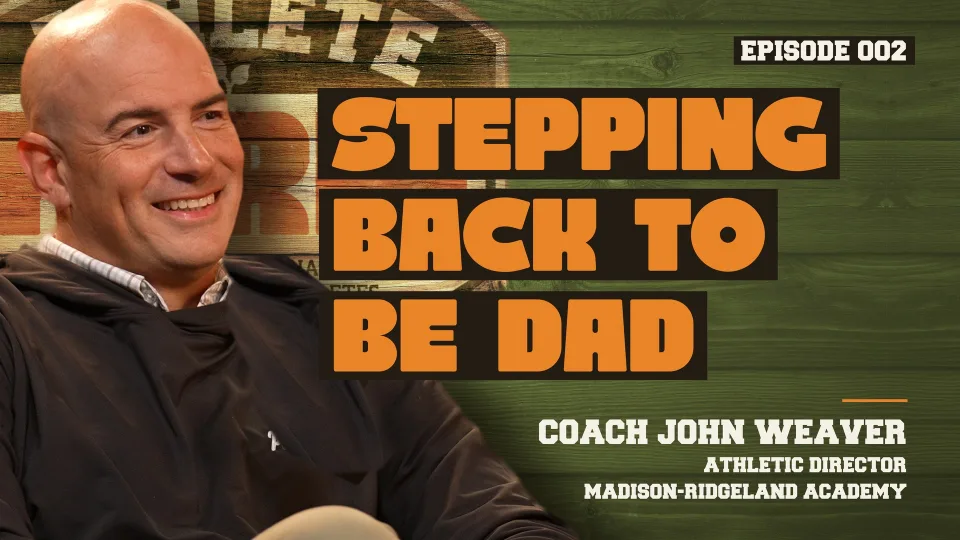
Coach John Weaver is athletic director at Madison-Ridgeland Academy, a former Delta State punter and team captain, and a father of two. He stepped back from coaching his own kids to be their dad. He says parents should stay quiet on the sideline and skip rewards for performance, participation trophies included.
Full transcript
0:03Mike Frascogna: Hey, welcome to this edition of Athlete Farm, a parenting almanac for growing college athletes. I'm Mike Frascogna III, and today I've got a good friend of mine with me, Coach John Weaver from Madison-Ridgeland Academy. Academy and Coach Weaver is a excellent guest for us because one he is a former college athlete so he knows what it takes. He was a dual athlete in college. He has had a long and illustrious coaching career. He's coached almost every sport there is. He's won multiple state championships so he's highly accomplished and he has most recently been correctly awarded with the role of athletic director, a well -deserved role for him that he's going to do a great job in, is doing a great job in, but maybe more importantly than anything, Coach is a husband and a father of two youth athletes, Luke and Emery, and so we'll talk about them today too and how all this gets applied to them. Coach, good to see you, and thank you for being here.
John Weaver: Yeah, Mike, thanks for asking me to be on the Athlete Farm. man this is just hearing what you said about me it takes me back a long way of like wow that just means I'm really old right now I'm really old
1:19Mike Frascogna: you are not because I'm still older than you so as you sit here you just remember that and it'll make you feel good and young well coach just kind of for the record I know your background really well give me and the audience just a five minute synopsis of you know you coming out of warren central high school in vicksburg mississippi and then ended up being a college athlete where did you go what sports did you play and really more importantly what did you learn from your experience as a collegiate athlete that's now carrying over into your coaching career and and ultimately into your parenting career as well
John Weaver: so I'll give you like the 30 000 foot view real quick you know warren central was great for me it ultimately taught me I wanted to be a coach robert morgan was one of of those guys that poured into me Rick Graham was my pole vaulting coach and how they invested in who I was as a person rather than just an outcome was really something that stuck with me and then transferred and I didn't know if I was gonna play college football or not I was lucky enough and God blessed me enough to be a good pole vaulter and I pole vaulted in college then ended up punting so when people say you play college football I was like that's a loose term I punted you know I I wasn't doing Oklahoma or anything like that. Saved my knees and saved my head and saved my shoulders. But I played for Gene Murphy. And if anybody knows anything about Mississippi Junior College football, Gene Murphy is one of the top ones. And he taught me a lot of how my career was going to go. I knew I wanted to start coaching when I was at Warren Church. I was like, man, this might be a career path. Gene Murphy kind of set the stage of the psychology of sport and what it takes to be good, what adversity looks like, Like, how do you handle adversity? So not just in athletics, but also as it applies as a college student, as you get older in life. And then I was going to go to Memphis. A lot of people don't know this story. I was going to go to Memphis. Rip Shearer was fired. Tommy West comes in. And a guy named Steven Gustowski, who had a long career with the New England Patriots, Hall of Famer one day, but was the kicker. And he was also going to try to punt and all that. But I knew that I wanted to continue to play, and I didn't want to sit the bench or anything like that. So I called Steve Campbell, and Coach Campbell was like, I don't have any money for you right now, but you can come up and you can earn a spot. We'll put you on scholarship in the summer. So I gave up the pole vaulting at Hinds and to Delta State. I didn't have a track program. So I was a punter and pole vaulter at Hinds and then transferred after my sophomore year after the fall season to Delta State. And punted there, loved it there, team captain. captain but Steve Campbell was there they'd won the national championship the spring after I got there and then Rick Rhodes is kind of the person who taught me what it meant to run a organization we had our players council I was head of our players council understood what culture was at a very early age and it showed me how to run an organization so you can kind of see the people that shaped me to be a coach the psychology behind it and then how to lead an organization was with him and man that my college career was amazing and thankful for those guys that have poured into my life and you notice I didn't say anything about outcomes I didn't tell any records I didn't say anything like that and I think sports today when we start getting in the weeds of the outcomes of games versus hey the process or the progress that we make as a human there's some there's some things we can talk about today yeah
4:54Mike Frascogna: so it's interesting to me that but I don't think I realized that you were a captain at Delta State, which says a lot about you as a person because you're joking about punters and kickers and not being real football players and all that. We're all familiar with that joke. It's not true. But the fact that you're a captain says a lot about who you are, not only as an athlete on the team and the respect that your teammates have for you and coaches have for you because you typically don't see punters as captain's team. So that's interesting.
John Weaver: You don't. And what's crazy, and I think about that story, is I was a team captain at Warren Central. I was a team captain at Hinds and the same thing at Delta State. So I really think God puts stuff in our life and puts stuff in our heart when we're born to lead and have that ability to lead, that characteristic that he puts into people to be different in some kind of way. So the people that shape my life, but also God has put that characteristic in me.
5:51Mike Frascogna: So you've obviously been leading. I mean, you just gave me the whole string. You're a team captain at Warren Central. You're a team captain at Hinds. You're a team captain at Delta State. You also mentioned culture of programs being something that you observed that was very important. And now you're in an AD role. So you are in a role of overseeing the entirety of an athletic department. You're in a leadership role. You're in the ultimate leadership role within an athletic department. and I have through my own observations I know how important culture is to you throughout all your sports programs right so we've skipped over your coaching career I I acknowledge that we'll come back and hit it in a minute yeah but but just jumping around as an ad and overseeing the totality of a sports program how do you implement culture through an entire athletic department as opposed to a single team that you're coaching or even a single unit within a team you're coaching?
John Weaver: I love that you asked me this question. We're starting to dive into branding our athletic department. What does that mean? What does that look like for us? And I think there's core four. There are four pillars that you have to stand on. And yes, you can get information from coaches and words, but I think if you get too many people involved, it gets watered down because because everybody has an opinion. So I started doing a deep dive on what are four things that I want in my athletics to stand on. Well, when you start looking at our school, tradition is one of them. Well, then excellence, I think, is across the board with anything that you want to do. If you're going to be a coach in today's society or a player or an athlete or anybody in our organization, you better be able to sacrifice. Sacrifice comes along with success. And the last one is resilience. resilience so as you start shaping your culture you got to look at things that resonate with your whole program whether it's a baseball team the swimming and diving team lacrosse soccer football basketball you name it volleyball you all have to have a singular focus to where I know a lot of times it's like accountability toughness well those are great but what what's your athletic department going to stand on so ours right now are tradition excellence resilience and sacrifice okay so it's just I think I think when you start looking at that mike you you got to go deeper it's deeper than the winds it's it's leaving a legacy for people that come after you like hey what do I want my legacy to be here as an athlete but more importantly for who I represented mras has because you as an athlete and speaking at mra you're going to represent mra with your number you're going to leave a legacy with what your number is and how you played well then you're going to look in the future you're still representing mra in some kind of facet like so I've represented mra and I'm still representing mra and I and my goal is those core four stick stick with people as they go throughout their life
9:00Mike Frascogna: so speaking of speaking of legacy let's talk about your legacy in emory and luke no wow all right so tell me a little bit about your kids it's obviously I know but right for the record ages sports that they participate in the athletic environment that you're shaping at mra is the athletic environment your two kids will grow up in. Now, few of us as parents have the opportunity to do that and to control the environment completely that our kids are in, or near completely. I know you don't have God power over there, but you do have a lot of control. So you are crafting an environment that you're willing to put your own kids in. So tell me a little bit about your kids and kind of what directions are they going? Because this is a whole different path to navigate. gate yeah
John Weaver: it is it's totally different you know as an ad you start looking at I'm in charge of other kids well then now my kids start coming to play so I'll start with my oldest emory is 13 and is a spitfire she loves everything from cheer to tumble to a little bit of basketball but you never want to put your kids in the sport that you competed in but I had a pvc pipe in her her hand as a pole vault pole at probably four years old yeah and just run around and then again at six and seven to where she has gravitated to love pole vaulting and that that's fun for me because it's a sport that I did and I get to teach her now are are there moments that there's that you're my dad like don't coach me but then there's moments of like I need your help with this so that's that's the tricky part I think when you get into parenting and coaching what do do I need to say and it and it's this easy listen to them and ask questions just listen to them and ask questions but emory is I mean she's like five eight right now she's growing like a weed she's cleared eight six already as a seventh grader she's going in her eighth grade year she's got a really good upside she's strong she's fast so seeing what she's gonna be able to do I think body control, but she's a really good athlete. She really is. My son, Luke, is nine, and he plays anything with a ball except baseball. We tried baseball. It was too slow for him. And I think a lot of parents were like, he's got to play everything. You've got to push him in. So I go back to Emory. I was a pole vaulter. Well, I used to play baseball, and I grew out of it. I didn't like it. And he was like, I don't want to play baseball anymore. where he's like, okay. And I think that's one thing to learn as a parent. Don't push your kids into a sport. They're like, you need to play this because everybody else is playing this. So he plays flag football with you and loves it. He also plays basketball and soccer. I mean, soccer is his number one love. I didn't like soccer growing up. I never, like, I really kick a soccer ball around and we're going to maybe score a goal or nobody's going to win. And that's one of those things. But he loves it. But what I look at is the athletic development that comes from all those sports that he's doing. You know, Emory used to play soccer, and she phased out of it. But I think as youth sports go, and I'm cultivating a culture of, hey, this is what I want youth sports to look like at MRA. This is what I want our middle school sports to look like, our high school sports. it's taking the mindset of what I'm doing with my kids there's not a lot of outcome based right now at this age especially for luke being nine like do as much as you want play as much learn as much as you want because they're steadily learning and learning and learning that the more they learn they're more gonna the more they're gonna be like man I really like this part of soccer or like this part of football or I don't like this part of soccer I like this part part of basketball so a lot of times I think as parents we kind of get in the way of funneling them to a sport and that's one thing I don't want to do I never want to pressure one of our high school kids who's really good say at running and they're like god charlie I really don't want to run I don't well you're good at it well now you're becoming transactional instead of transformational He's like, hey, I need you to run for us so you can get this amount of points, or I need you to play basketball because you can rebound really well. I think there's a fine line there of transactional versus transformational, and that's what I'm guarding myself as an AD because we just won the volleyball state championship. Awesome. It was fantastic. But you also don't want to get into outcome -based all the time. let
14:00Mike Frascogna: me let me ask you kind of a let me challenge you on that point a little bit I'm curious what your answer is I truly don't know how you're gonna answer this so I agree with you a hundred percent on it's about the development of the athlete it can't be transactional it's not I'm just using you to try to win a game right that that's bad right I'm totally on board with that however I think that there's also you've got to balance that with it can't just be a hundred 100 developmental and we don't care about the outcome at all because everything is habit forming right winning is habit forming losing is habit forming that's so how do you navigate the tricky balance of that where on one hand you have the parent who is gonna like claw your eyes out to win every youth sports game they can versus versus the the other parent who goes hey we're just here to have fun and they lose every game and their kids go home at night quietly demoralized and and or learning to believe losing's okay so where's the balance between that all right
John Weaver: so So I've thought about that question, and here's where I land on this. Let's start at, like, seven years old. I think you develop and learn skill, and slowly you implement competition. Because the last thing we want to do is have a kid who can't throw a football. We'll use football for an example. Who can't throw a football, can't catch a football. Well, now you put them in an area to compete too early, and they don't succeed they're frustrated I mean I'll use my own son sometimes like we would go home and throw the football and catch because throwing and catching is fundamental like if you want to be a receiver your first job is what your name is a receiver you receive the football that's right very important so I think and I can't I mean I said seven eight I mean it's it depends It depends on the maturation of the kid. Like, how are they maturing? How are they growing? So it's seven, eight. But I think the developmental goes, goes, goes, and then you start implementing competition, whatever the age that is. And it's not like, hey, we're going to win at all costs or anything. You're going to see the development help the competition, which if you start doing those things, I think you start winning. Would it be
16:34Mike Frascogna: fair to say that you've got to give them objective measurables that they can see? Yeah, there needs to be benchmarks. Other than the wins and the loss. It has to be something within the game that we're looking at this, this, and this. That's how we're judging success. If you do those three things, it will probably lead to a win, maybe not, but this is what we're going to judge on. Yeah, like a daily win, I
John Weaver: guess. So, I'll use Luke for an example because he's, I mean, from this year to last year, huge growth. Huge growth just from him understanding football, from him understanding body movement, all that stuff. And I guess two weeks ago, he did a counter play, ran to the left, sticks his foot in the ground, makes a cut, then makes another cut and scores. I was like, that's a win. Not because he scored a touchdown. But it's a win because you start to understand, hey, I'm competing, and I'm doing things that I've learned in practice and applying them to a game situation. Now, is it fun to win, Mike? Absolutely it's fun to win. So I don't want to dismiss that, oh, he's just a fun guy, that winning is not important. No. Winning is – it's important. I wouldn't be in the position I am as an athletic director I went to all our coaches and was like, hey, surrender the outcome. Just have fun. We'll see how the year goes. I wouldn't last very long. No. So winning is important. I think when you start the eighth grade, the ninth grade year, hey, let's start putting – because equal playing time and fair playing time, like giving a kid fair playing time is all predicated on practice. Yeah. Like, how much you put in at practice, how much you attend practice. Because when you start talking about football, if you're a right guard or a left tackle in the ninth grade and you've missed practice because you went on a family vacation and you've missed two weeks of practice, and you go in as the left tackle and you don't know what's going on and that quarterback gets hurt. I mean, think about the show when Billy Bob goes down and Lance Harbour gets hurt. hurt I mean injuries happen when you don't do things the right way so equal playing time fair playing time that's a whole another story but winning is important but I think the development and the daily wins that you talked about help guide where we go to win like you you can get the wins come but it's also like you said there's two sides of the parents like there's a call your your eyes out parent which I've seen those but I've also seen the side of like oh we're just gonna have fun we have ice cream and all that stuff neither one is good I think you have to find somewhere in the middle to where we're gonna develop we're gonna compete you're gonna try to win like there's a win factor here and it's not okay to lose because once losing happens all the time it starts becomes a mindset like you said
19:45Mike Frascogna: yeah and that just carries over to other areas of life and I think we both agree that one of the reasons youth sports is so important and sports in general is because it does teach the lessons that are going to make these you know kids successful as adults when we don't get to play sports anymore that's right and we're you know we're playing that real game of life of you're being a husband a father and you know an employee or boss or whatever it is so you you learn these these basic skills in sports it's a great place to learn it It doesn't mean you can't learn from other places. But that's what we're trying to – that's what I hope my kids get out of it, that they're – and it's fun. It's fun, and they're learning these skills. Well
John Weaver: also, and I'm thinking about this, Luke plays soccer, and he plays – like they split these teams. Like there's a green team and a white team. And, look, I was a typical parent. I was a TP. I was a typical parent. The two teams came out, and I was like, why isn't he on that team? Yeah. why is he on this team? And so I'm talking at myself now. I was like, you know what? He's a pretty good athlete. Why isn't he on this team? And it just flipped. I was like, you know what? He's on that team for a reason. And I think it's a leadership lesson too. If your kid doesn't get the team that you want him to be on, use it as a vehicle. Like, you know what? You're on this team for a reason. And maybe it's to be a leader. And that's what I phrased it for Luke. I was like, man, go be a leader for this team. Go help this team develop. Go help this team get better. Go help this team compete. And they're winning.
21:19Mike Frascogna: Focus on what you can control. That's right. That's
John Weaver: right. And I think that's another side of youth sports. It's like, I don't like being on this team. We're going to start our own team. I don't like being on this team. We're going to start our own team. What are you teaching your kids there? Like I said, I'm talking to myself. Like, there were two teams that were split. There was a green team and a white team. and he didn't get on the team that I thought he should be on. Right. Well, that's wrong thinking. That's bad on my part.
21:43Mike Frascogna: So just lock in, focus on where you are. As my mom puts it, bloom where you're planted. That's right. So just control what you can where you are. So you are – I know at one point you were coaching Luke in multiple sports. I think you were – Terrible idea. Terrible idea. So – and I'm sure you probably coached Embry as well. I know you at least coach her in pole vaulting. You still do that. but you have largely removed yourself from coaching your own kids talk to me about that decision because I know how much you love coaching and just removing yourself from coaching even coaching football I know it's a tough decision for you at the high school level because you're very successful there I know you miss it but you you made a business decision and a career decision you you separate yourself from that but as a as a father you made that decision too to remove move yourself as coach for your kids okay talk to all these parents out there that coach their own kids and and give them give them some advice of what what are the pitfalls how do you do it the right way oh
John Weaver: wow let me let me let me start with this and this is where I love coaching I I love everything about it. And when I start looking at what I was doing for my kid, so I'm going to go back, coach him in baseball. I coached Luke in baseball, and I was like, man, I'm going to make this an awesome experience for him. So we had baseball cards after every game. We got signed baseball cards at the end of the regular season. We got him a whole pack of cards, creating a cool environment, cool experience. what I found was I was spending time coaching other kids more than I was coaching my own so he was getting neglected because I didn't want it to be where oh he's getting all the treatment because dad's coaching him so I felt that from when I was coaching in high school fast forward coachman flag football same thing happened neglecting my own to where I couldn't have a conversation with him after the game I'm like man how was that I love watching you play I love doing that to where it's a it's hard it's hard when I tell you I love football I love of everything about football and being able now to share an experience like there were times that he would come on thursday mornings and watch his practice and I would like he'd be on my back and I have a head fit on and we're just calling plays and he's like can I listen I was like maybe not right now but there were times like after practice he put the headset on and those are times in my life I'm going to cherish with him but making the decision to remove myself allowed me to be more involved with his development and his growth and this is personal to me like this is it's not square peg square hole like the whatever peg you have fitted in your peg but it's been hard but it's also been refreshing I mean you see me at raptors practice all the dads are out there throwing all that stuff now well I go out there and throw some and all that stuff. There's no coaching involved. It's just me throwing a football. But it's fun to watch him develop and me to get in the truck and be like, tell me one thing that you really loved about practice today. Hey, what was the one thing that was really hard about practice today? It allows me to have conversation. Now, Emery, coaching her in pole vault, it's like oil and water. I know it's expected. I've done the sport. she's old enough to know that I'm her dad but I'm at that point where like you're my dad you don't know all this right but it's a fine line of I get frustrated but she doesn't know that I get frustrated when she asks all those questions I know like I had those same frustrations when I was a pole vaulter so coaching her and coaching him totally different to where where I'm more involved with her because she wants to pursue this. She wants to do this. Now, basketball and all that stuff, like, we'll go shoot or whatever, whenever she wants to. I'm not going to, like, hey, I'm going outside to shoot. Do you want to go shoot? She's like, no. But she's begging. Hey, when does the pole vault pick go up? It's like November 7th. after the playoff game. It's going up. So she's chomping at the bits. And I think that's one thing as a parent that I love is she's wanting to go do that versus me saying like hey pole vault pit's going up when are you going to start pole vault nagging her I guess would be the word for that
26:24Mike Frascogna: you know that's so there's a good question here of when you're observing your your child they're interested in the sport they're asking for it emory's asking when's the pole vault pit going up is there any do is there any rails that that you put up to try to scale them back if they're asking for it. So if they want it, do you essentially set up the buffet and say you go gorge yourself? I'm not going to take you to the buffet and mandate you eat it, but if you're asking for it, I'm going to lay it out, and you can go gorge yourself. Any rails to it? I
John Weaver: don't think so. This is personal to me because if they're interested, show them all the wonders. like show them show them the videos show them like hey if you do this you could go 14 feet here's some crazy things you can do in practice here's some things you can do sprinting wise here's something I think you show them all because it opens their eyes rather than just this microscopic pole vault I'm in eighth grade here's the pole it flings me over I think you show them everything and help them pursue that because so many times in life this youth sports world is so negative that you're like you know what you like this yes let me show you everything it's like willie wonk in the chocolate factory you walk into willie wonk the chocolate factory you're like there's stuff on the wall there's a chocolate river there's on your you're just opening your eyes to all this stuff I think you do that if your child is saying hey I want to pursue this give me every opportunity I mean don't go break the bank right yeah but give them every opportunity to be successful like luke luke's playing three sports right now guess what go do them all yeah pursue it pursue the football pursue the basketball pursue the soccer I could do it all because we don't know what they're going to be when they're older
28:23Mike Frascogna: so let me go ahead and ask you the the lightning rod question because you just You just hit on it. Luke's playing all these different sports. Hey, why are you playing all those sports? You know, this sport over here mandates that you be here this many days a week, and it's a year -round sport now, and you have to specialize, and you have to focus. Or, hey, you're going to get left behind if you don't do it. If you don't commit to this sport now at age nine, you know you'll never be able to play it at a high level. so you got a kamikaze all into one sport and hey we got a couple tournaments in puerto rico you need yeah I mean the joke you know the joke all right so what do you do with multi -sport athletes good thing bad thing when does it when is it good when is it bad does it become good later is it is it all how do you navigate all youth sports and how many sports to play It's
John Weaver: a loaded question, not even lightning. This is like a sledgehammer. This is going to be a really simple answer. At an early age, they haven't hit puberty. They don't know what they like. They don't know what path God has for them. However, there comes a certain point in their development that you're like, which way are we going to go? What sport are we going to choose? So I'm not going to stay on the fence on this. I'm going to give you a direct answer. All right. In an early age, you play it all. I think you play it all. And the older you get, if you can maintain all three, play them. I think about Will B. Zott. Will B. Zott played baseball, football, and basketball at NRA. All at a high level. all they were he was an all -state on all three because he managed his time and it wasn't a parent saying hey you have to be here and here and here and here he ended up playing college baseball great could he play college football yes if we're speaking specifically to nine -year -olds and 10 -year -olds, the day a coach says, you have to be here or you're not going to play when you get older, I'll leave that organization. I'll leave that team. I'll leave that coach. Here's why. You're telling me that if I invest now at nine and I haven't hit puberty, that that's what I'm going to go do? Think about Konnor Griffin. Conor Griffin played football for a little bit, played basketball for a little bit, always played baseball. Phenom. He didn't know that when he was nine. Had no idea.
31:15Mike Frascogna: And you're saying puberty is the cutoff in your mind. Because you say, didn't know it at nine. No. Do you know it at 10, 11? Where was the line?
John Weaver: Probably 13, 14. Yeah. His dad had to have some kind of, like, okay. okay, he's throwing 85. He's hitting the ball 380. There's something there. Josh Hubbard, same thing. Played football, ran track. Basketball started being in 10th grade, like, because he played football in 9th grade. 10th grade, he started falling. Like, he's like, all right, I'm going to do this. Yeah, started specializing. Yeah, and I think that's the word, specialize. When do you start specializing? I think when the athlete understands that hey I want to pursue this even more a coach saying be at practice do it this and you're like I'm trying to play all these sports how am I gonna how am I going to designate my time there's seven days in a week there's 24 hours in a day I also want to be a kid how do I do this so the flip side I think this is this is where the parents can land when I go to the sport am I having fun is the coach making it fun to where man I want to go to that versus I don't want to go to that now they love playing the sport say it's soccer football and basketball they go to soccer practice and they're like oh yeah I mean fun I love the sport but I'm not I'm not developing and they understand this at nine and ten I go to basketball it's great I love it but I'm not developing they go to football practice like man I love it because I'm with my friends getting coached up I'm learning some new things and I see something happening but I don't see those other two I think that naturally tells the kid I'm I'm liking that you know because I'm seeing investment so
33:10Mike Frascogna: you really you you take You take your cues on specialization from your kid. Their actions and their attitude towards sports you feel like is the indicator light. I do. That's their life. Yeah, absolutely.
John Weaver: It's their life. Do I feel bad a little bit for putting a PVC pipe in everybody's hand at four years old? A little bit.
33:32Mike Frascogna: You'd also feel bad if you didn't because you're a wealth of information. And what do you do, withhold it? We wouldn't feel good about that either. I
John Weaver: was like, you're going to love this. Like, I was just thinking, like, Luke, he don't want to touch it. -huh. He's like, I don't want to do that. Okay. Like, he has no interest in track. None. Which is fine. Right now. Yeah. Which is totally fine.
33:56Mike Frascogna: It's age nine. So it's always right now. We talk about that long development horizon. Oh, You know, they've got a long way to go. And we don't know what they're going to be in, you know, five, ten years from now. clue. So it's a long development. We just want to keep them in it to give them a shot that they can develop to let's see what you're going to become. Let me ask you a question about for parents that have kids playing multiple. Well, it doesn't even have to be multiple sports. evaluating how would how do you as a parent objectively evaluate whether your coach is doing a good job and is creating the right environment for your kid my
John Weaver: kid wants to come back to that practice
34:41Mike Frascogna: okay and and yeah it's yeah what is it that tells you that's correct that's not correct is it just that simple partly
John Weaver: because I asked those two questions when we leave every practice hey man what'd you find that was really cool today what'd you love about practice hey what was real challenging but also you look at and I don't I'm not one of these that like to watch practice all the time so I don't watch him practice soccer soccer sometimes I bring my laptop to watch him do flag football like just like man it's your practice not my practice basketball I've hardly ever watched him practice because that's a practice but who am I to judge how a coach is gonna lead a team I know how I would do it but that's teach their own but I also think is your kid enjoying being around that person person because that is a huge indicator of development piece and if your kid is enjoying going to practice and developing and they're coming back like do we have to leave like yeah practice over I don't want to leave I want to get a few more shots up I want to take some more pks I want to catch some more footballs if they want to stay longer than the allotted at practice time that coach is doing their job now there are some some instances where there's some bad coaches that you know I'm all about demanding excellence demanding accountability there's also that demeaning part that can run a kid into the ground when they're demanding is different than demeaning when you start demeaning a child especially at nine or ten or even putting Putting them in a box of, like, you're never going to be good. What are you doing with that kid's experience? That kid's experience is going to be done, and that sport is over. Like, they will never have the same love to pursue, like we said, the Willy Wonka effect. They're like, I don't want any of that. That's all sour. It's terrible.
36:54Mike Frascogna: How do you handle parents coaching from the sideline? That
John Weaver: is a – talk about a lightning rod question. I'm one of these I really watched when Eli Manning was going through Ole Miss because we were around the same age and I watched how ESPN would always show Archie just watching the game and I told myself what I tell my kid during a game while they're playing playing and the coach is coaching if I'm saying something it's taking the attention off of what they've learned in practice and turning back at me so now their mental focus is who do I listen to who do I listen to so it's real easy coaching from the sidelines if you're a parent shut up let the coach coach it's that simple and that sounds harsh because all these dads and all all these moms want to have little johnny do this little johnny do that go do this watch this stay back
38:08Mike Frascogna: yeah well you
John Weaver: know you don't know what the coach is wanting them to do
38:11Mike Frascogna: I for me I think the way I've tried to summarize that is for for a parent is coach and encourage effort from the sideline but not technique there you go or shut up was harsh sorry or yeah no but it's fair I I mean because I think parents actually need to hear that they're like well no he's doing the wrong thing how do you know how do you know how do you well I I played this sport before and it's like yeah but the these kids only have so much bandwidth to receive a message in the moment and And you're overloading the bandwidth. Well, and here's the other part, Mike. When
John Weaver: a parent coaches from the sideline, and I've seen it this year with some kids, they're seeking affirmation from the parent after they do something. They're looking to see, what is my mom or dad going to say? Am I doing good? Now, and I see this in soccer all the time. Play it here. Do it here. Do it. And I want to look at some of them and be like, I'm like, just let them play.
39:19Mike Frascogna: Yeah, I am very hesitant to say anything during a soccer game because I immediately check myself and go, I have no idea how this game works. I don't understand the strategy here. I know the ball has to go on that goal, but as far as how we're going to work it now, I don't understand that. And so I can't coach strategy because I don't know it. All I can do is I can encourage effort. You can show up. You can control your effort. I can demand effort from you as a parent, but otherwise, I really just stay quiet.
John Weaver: I remember vaguely that the first soccer match that Luke had, I was like, I have no idea what they're doing. Like, he's playing left back, and I think he's just a defender. And, okay, sure. But just like you said, hey, applaud the effort, but also tell them, hey, man, I love watching you play. play I love watching you play I love watching you compete great job today yeah if they do it a bad job you're like hey man what not and it's not even demeaning or like ask Mike hey why was that so hard today like what made that hard how to phrase your questions to promote the ride home of like hey we're gonna get some chocolate chip cookies and hey let's talk about what was was cool that happened today or why was that challenging same thing you ask at practice and
40:40Mike Frascogna: how how long how long do you allow a conversation about a game that just happened to continue before you as a parent need to kind of have a shutoff switch that goes we've now passed a certain point this game does need to be behind us and we move on to whatever is next when you start beating the dead horse all right but when is that because I mean your
John Weaver: kid says as he's trying to – he or she's trying to change the subject and you're still bringing up, well, talk about that play. Talk about this play. And they're like, what are we doing this afternoon?
41:12Mike Frascogna: It's over. It's over. Or they're not giving you answers anymore. They're not even trying to answer.
John Weaver: Yeah, they're like, I don't know. They're just – they're not interested. So, for me, it was – like, for Luke, I've always asked him those. Like, hey, what was really cool about practice or what was really cool about that game? and then, hey, what was really challenging? And then with Emory, it's the same thing. Hey, you got 8.6 today. What did you do different? Hey, we were going for 9. What was the challenge there?
41:43Mike Frascogna: I like those questions. They're more open -ended that allows them to explain it as opposed to a critique. Yeah, I don't want to critique them. Yeah, listen to me. I'm going to tell you what you did wrong. You're asking more open -ended questions, and getting them to maybe self -critique. Be
John Weaver: like, hey, oh, yeah, I was out of position. My hand placement was wrong. I didn't plant the pole soon enough. I'm like, okay, that's all fixable stuff. Great.
42:09Mike Frascogna: So let me, kind of a related question, and I agree with you on pretty much all of that. When, in what instances, as a parent, do you drop the hammer on them? because you go, you know what, this deserves a more spirited response, a harsher response. What do those instances look like, or do they even exist in your mind? You
John Weaver: know, there are times in my youth career that I'm going back in my memory bank and wondering like were there times to where my parents kind of lashed at me like what happened on this one why didn't you do this right what and there are and I think it can be done but it goes back to that demeaning part like what what's your what are you trying to accomplish with that if you're going to yell raise your voice your tone changes your face changes it's more of a a scowl what's your result what do you want from that for me it's effort like if you're out there and you're just kind of lollygagging around I'm I'm probably going to be after the game like did you want to be out there does it look like you didn't really care how can we fix that maybe it's because they stayed up too late the night before or maybe they spent the night with with a friend and they didn't go to bed till 2 a.m or they play video games all night but ask them those questions instead of like hey your effort sucked hey what's up with that like you put all this work into this but all it goes back to those open -ended questions you put in all this work you go to practice you bust your tail the game is where you get to show Show off all that stuff, and it was lackluster. Why? Instead of telling them, like, hey, you stink.
44:13Mike Frascogna: Well, that, yeah, I would think that one is way over the line. So what I'm looking for is that more nuanced, I'm going to assume that anybody watching this podcast is already fairly in tune to I don't just berate my kid and tell them they stink. think so it's like what what are the questions that you ask and how exactly how do you phrase it the the right way
John Weaver: yeah and I you know I think it goes back to the effort piece like man you made great effort at practice you do all these things but what happened why why were you not interested in playing that ball why did you not sprint to go and guard the guy on making a wide wide open layup why did you not hustle to go pull that flag and you just watched him run right by you yeah like what what's going on is there something I need are you sick yeah did you stay up too late last night how much candy did you eat the night before right all those questions and I think you put it back on them because they're the ones that are playing yeah but also being their parent I'm gonna have to take some ownership of that if we're doing things the wrong way you got to change that
45:28Mike Frascogna: where do you stand on rewards and punishments for performance so the old hey 10 bucks for every home run you hit this weekend it's nil yeah so do your kids have nil deals already somebody else taking care of that you don't have to worry about the money because you've already got that wrapped up so So rewards for performances, good idea or bad idea, and the inverse of that, punishment for bad performance, taking things away. Yeah, these are. What do you think?
John Weaver: These are, wow, these are all things that I really think parents go through. it's real.
46:14Mike Frascogna: I mean, well, we go through it. My wife, Sharon, and I, I mean, you know, these are conversations we have. And you go, is this the right way? Do I really want to reward the performance? Or do I just want your own self -satisfaction to be the reward? Do I need to take this from you because of? All
John Weaver: right, here we go. And this might rub a lot of people the wrong way. But it's those rings they give out. as a reward for winning whatever championship it is and look that's great you accomplished the goal what are we going to do with that right what are we going to do with that and like luke and them won the basketball championship they're like holding up the rings and I'm out I'm like oh my gracious like for the record I hate them same I
47:06Mike Frascogna: I hate the giant rings that are made of plastic and not worth it it's just dumb I hate them
John Weaver: china yeah they come from overseas but it's it's one of those things that like I didn't even post that picture that he won a championship holding the ring I was like who can't like great the reward was that y 'all won the championship right and you got a ring that's great you got a ring really cool yeah but rewarding them for what they're supposed to be doing no
47:36Mike Frascogna: well two it's kind of two different questions here we we have the reward is the ring that's the team reward and we got off on that I hate the rings you do too yeah so the question is more from the individual parent standpoint yeah what do you do you offer things as rewards no
John Weaver: you don't dangle the carrot out there you can't mike you can't go hey if you hit If you hit two doubles, we'll make sure that your first car is a Ferrari.
48:04Mike Frascogna: Yeah. Well, maybe not that far. Ten bucks a hit or whatever it is.
John Weaver: There might be some parents that do that. Hey, if you hit 400 in youth league, I'll make sure that you get a Maserati or something. I don't know. I just know you don't. I don't know
48:19Mike Frascogna: those people you may, but.
John Weaver: I don't know. It's youth sports, man. Anything's
48:24Mike Frascogna: possible. Yeah, there's some stuff out there. I
John Weaver: just, I really think that if you reward them, the self -satisfaction of, man, I achieved that goal. That was a, that was an obstacle and overcame it. I can't hit a curveball. And now I can because I put in a lot of work in the cage. I hit a curveball. Might have been an out, but I hit a curveball. And then you start turning into a seeing eye single or whatever it is. Yeah. But don't, don't get, don't do that. You feel like it
48:54Mike Frascogna: teaches them to play for the wrong reason.
John Weaver: Correct. NIL, same thing. It's that whole thing we're in right now.
49:02Mike Frascogna: So what about the inverse, the taking something away at home?
John Weaver: No. No. Why are you going to base something off a performance of a sport? You can't play switch because you struck out three times. How fair is that? What are you teaching them?
49:16Mike Frascogna: What if it was an effort issue?
John Weaver: Ooh. I still don't think you take things away I think you have the conversation you teach them because if there's an effort issue as a leader of an organization I am just gonna take that away from you I'm gonna coach you up I'm gonna teach you hey this is important your team expects you to be at this level do it I think I don't think you think you don't reward you You don't take things away. It just is what it is. And that's a gray area. But it's also, like, don't do that. Don't give kids things to be better. Like, hey, I'll give you three scoops of ice cream if y 'all win the championship today, especially if you hit a single. Hey, you don't get any dessert because you didn't pull two flags at the football game. It's a quid pro quo. Why are we doing that? This for that? It's sport. Let them have fun. And like you and I say, it's a long game. Why are we going to put something in their mind of like, oh, well, if I don't do that, I'm not going to get that, so why even try? It's not attainable.
50:26Mike Frascogna: I already know the answer to this question, but I'm just going to enjoy listening to you answer it anyway. So where do you stand on participation trophies? Do you love those? oh yeah you're having to take a drink because this is about to be a long monologue no it's not so where do you stand on participation trophies you love them don't you I hate them well
John Weaver: what everybody participates congratulations you made it through a season and we want to give you this because you are on the team that just played played not everybody shouldn't get a trophy that goes back to fair and equal playing time fair playing time versus equal playing time not the same I really think that when you start looking at participation trophies I'll tell you where mine went in eight -year -old baseball in the garbage right when I left because I hate baseball for the reason that I didn't get to bat and I was like everybody gets to bat if I get a participation trophy everybody gets to participate well guess what I didn't get to participate I didn't get to bat so they gave us a trophy like congratulations great job this year playing for north bay thank you boom garbage what do you what are you setting a precedent for like we don't even I tell our coaches now, like, they give these certificates for being on the team. Stop. Stop. They end up in the garbage. They end up in a scrapbook that people pull out in 20 years and be like, oh, yeah. Well, do you remember you played on that team? You don't need a certificate. You don't need a trophy. Like, instead of spending the money on the trophy for the team, for the participation, go create a cool experience for them at the end of the season.
52:16Mike Frascogna: Let me ask you this question. This is – I'm going to wander into dicey territory because I coach your son, Luke, in flag football. Go ahead. And so I may open myself up for criticism here. So at the end of the season last year, you recall that we gave them something at the end of the year. Still in his room. Okay, so I'm curious. Describe what it was and describe why that is still in his room and didn't go into the garbage. Yeah
John Weaver: it was a poster board with all their team, individual shots, a cool shot of them, scores at the bottom, and a recap of the season. That's so different than a trophy. It captures a moment for them to go back and be like, wow, I remember this game. I remember that. It creates talking points. I mean, it still sits. sits, he's got these two, like, I don't know, floating shelves, and it sits on the top of the floating shelf. And I was like, that's like, every time I go in his room, we do a devotion. I was like, that's really cool. And sometimes we talk about, like, do you remember that? Do you remember this? He's like, yeah. He goes, do you remember the last flagpole? I was like, I do. It was like the gladiator. But it creates those moments that they recall how the season was. A trophy? that's great it's a participant 2025 baseball league yeah it doesn't tell a story and I think when you start looking at hey I want a moment and I want memorable moments that I can go in my memory bank and be like you know what that was really cool that picture tells me this and
54:04Mike Frascogna: photos do that more than yeah I think instagram's a big thing right yeah photos are great for it so I I think they do a great job of achieving what they want. But if you do something that's cool, like the same thing with the ring. Somebody ordered that on Amazon, and, you know, they – There's no time and effort into it. Like
John Weaver: go and make it special to where the kid who's nine, when they turn 19, they're like, I remember that season. Yeah. I remember that. I remember that flagpole. I remember my first touchdown. Versus, that's a cool trophy. What did you do that year? I can't remember.
54:37Mike Frascogna: Yeah, can't remember. Don't know what's going on. last question so how how do you and your wife kristin you you know y 'all have obviously made a decision to make athletics an important part of your family's life yeah how do you how do you manage that with you've got two kids playing multiple sports multiple activities activities y 'all likely do the same thing the rest of us do you spend a lot of time in the car you eat more chick -fil -a than you you know probably really want to and you're on the move and you're on the run how do you both prioritize sports as a family but also set limitations on but it can't go this far what what y 'all's what y 'all's management strategy yeah
John Weaver: well you know when I first started doing this I was like kristen we're gonna have to make a stand on on some things of sunday practices wednesday practices sunday games and we were both the opinion first we play on sunday we're not playing like sunday's a sacred day like we're gonna go to church we're gonna be in a life group and we're not gonna play same thing with wednesday we're not gonna practice on wednesday we're gonna go to church kids want to be in life group they want to do some some things at church and it's difficult to say the least it is very difficult to manage because I still have our athletic our high school athletic department that I'm still I mean the last two nights I haven't been at home to where he has flag football practice he'll have a soccer practice right now those are both on sunday he has one on wednesday we have games on mondays and tuesdays so it's just where where do we find that piece with like enough is enough, but he also needs to be here to develop because there, there are times Kristen looks at me. She's like, Johnny had been at soccer practice in a week and a half. I was like, I know like we've been going to football practice every week. She's like, which one do we, and here, and here's, it goes back to the earlier part of the podcast. I know it's saying this cause you're in front of me. I'm not, this is fact. fact the kid wants to go to the practice where he's going to be developed when we go to some soccer practices they just scrimmage just scrimmage well anybody can do that a pd roll out a ball and go play yep there's no development so the kid going I mean this is real life the kid's going to go and navigate and focus his time and energy into where I'm getting developed and I'm seeing end results like I'm catching a football more and guess what else there's a soccer goal there that at the end of practice all my friends like kicking the soccer ball around so I'm killing two birds with one stone so when I ask him like hey you want to go soccer okay you want to go football right can we get there early and getting there early means his friends are there and they're going to do something fun
57:35Mike Frascogna: yeah yeah he's
John Weaver: like can we stay late and I'm like we got got to go man we got to go it's dark outside but that that's the tough line where chris and I it's like it's not all or nothing because we don't want to make it sports or bust because there is value in family time so like tonight she's like are you available tonight I was like yeah we have no games I'll pick luke up emory's got tumble we'll do all these things and And we'll be home tonight. Thursday night, same thing. Friday night football, I'll see you Saturday morning. Right. But I think the priority of setting limitations, and we don't have it figured out. We don't. Setting those limitations of, hey, what's important now? But also, what's important for their development? For Emery, how much do I go and practice pole vault with her extra? For Luke, how much soccer practice does he really need at this age when we're kicking a soccer ball? there's some skill involved there but I want to develop as a person a teammate and he's getting that with the raptors but also he wants to do basketball stuff okay well we have a goal at home you know invite some friends over and let's go play I think it's the main thing for for kids and development of youth sports is play just go play so anytime he's like hey you want to come play like one of his friends like you want to come play this afternoon yep he does sure does because reps just reps
59:03Mike Frascogna: whether they're structured or not and
John Weaver: I and I think I've told you this that's where both of my kids have gotten better because they just go play it's it's unorganized and you know emory's gotten faster because she's just running around doing stuff at football games like running around yeah she's jumping and doing all these things it's nothing structured same thing with luke like he's gotten faster because they're like what's he is he doing speed training is he doing this like yeah nope he's just running around at football games and he's figuring it out yeah he's he's bobbing and weaving and dodging and jumping and running yeah you know survival of the fittest like survival
59:40Mike Frascogna: yeah that and that's definitely something that's so much different now than when we grew up the amount of unstructured play that our kids have compared to what we had growing up that's all we had it's it's just a world of difference you
John Weaver: go roll out of football and like and we got to go find eight people and we're about to go play yeah and it wasn't two Two -hand touch. That's right. It was tackle. And it was in the street. In the street.
1:00:02Mike Frascogna: That's right. And so it seems we have replaced a lot of that with now structured time and specialists that are working with our kids. And it's a difficult thing to not engage in or to do it in the right amount because it's very much an arms race amongst parents. Am I going to be left behind? Am
John Weaver: I going to be? Well, this kid's doing this. I got to do this too. No, you don't. And that's what people ask me, like, I won't name the name, but one of the dads, like, Luke Dunn, training? Like, no. But he looks quick. It's like Friday night football games in the VIP kid zone. He's running around chasing his friends. And if he wants to play tag and you want to tag somebody, you better run faster.
1:00:51Mike Frascogna: Yeah, you know what else I kind of compare this to is there's all these studies out about playgrounds now about playgrounds have been made you know with spongy ground they're all rounded off and there's nothing jagged and they're very safe and then you you have this whole movement about make playgrounds dangerous again because you learn different skills on the you know unsanitized playground bro
John Weaver: that dome the monkey bar thing with the there are so many times I was like this is really cool how many different positions can I get to where I can lay my head back yeah and hold my leg like hold myself up with my legs
1:01:32Mike Frascogna: and you probably fell some and probably had some injuries and all that you're still here but but maybe we were learning a lot more as athletes in those environments than in the you know the padded room jump house yeah I think it's like a cat yeah like
John Weaver: take a cat and throw it it's gonna land on its feet
1:01:49Mike Frascogna: yeah yeah you'll learn you just learn you
John Weaver: just learn and I'm just I I think a lot of times we we put our kids in a bubble and look I do that sometimes like oh don't do that but I'm like go do that go play go wrestle go wrestle on the trampoline yes because I used to wrestle on concrete yeah
1:02:10Mike Frascogna: I mean it has rusty springs but deal with it yeah just figure it out you know what's
John Weaver: that old saying when when coach is like when the coach the kid comes and asks coach question like can I do I was like man just be an an athlete yeah just be an athlete that's
1:02:23Mike Frascogna: right yeah that's all a lot of times that's your instruction just figure it out just kind of be in this area and what's my job on this play be in this area and be an athlete that's just react it's gonna make a play well thank you for your time this morning I'm gonna want to bring you back there's a lot of other things we didn't cover that we could keep diving into so you'll be back at some point I've got to be respectful of mra's time because I know they want their ad back and I would keep you here for probably three three hours but I appreciate you being here it's all good advice I I I definitely admire the way that you handle things not only at the school but with your family and your kids so I think you're you're a great person to look to thank you for advice and and as a model so I appreciate you being here you'll come back
John Weaver: absolutely I'll come back I very good you know if the youth sports parents will want me back they might be throwing tomatoes at the screen right now but
1:03:14Mike Frascogna: they might if they do I won't tell you about it I'll just I'll just lie and tell you tell you it was great It's all good. Everybody, thank you. This is Coach John Weaver here with us on this episode of Athlete Farm. Look forward to seeing you next time.
Transcribed automatically from the studio recording. Times are where each question starts in the full episode.