Episode 001
Coach Kevin Griffin
Head Softball Coach, Belhaven University
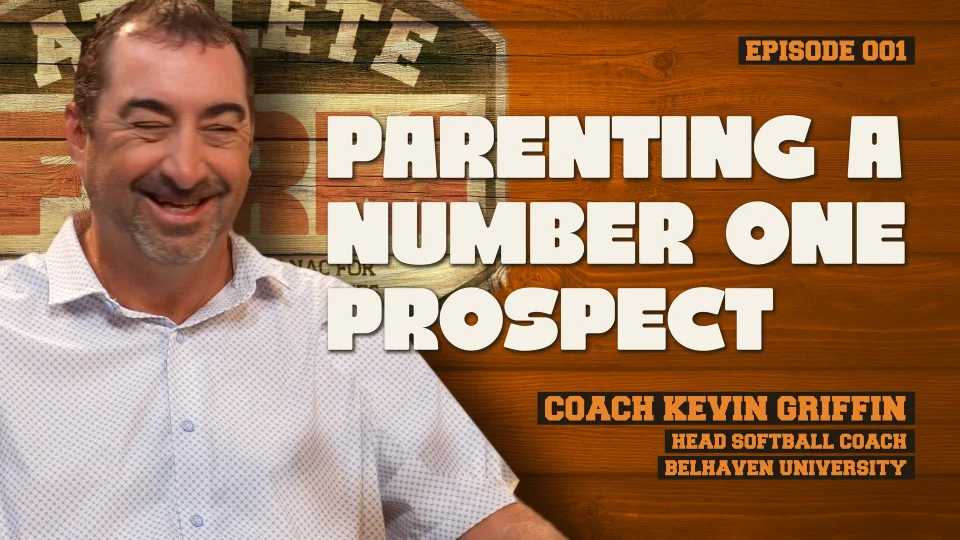
Coach Kevin Griffin is in his 17th year as Belhaven softball coach and father of Konnor, the number one prospect in the country at 18 and a first-round Pirates pick. He calls college coaches’ love of multi-sport athletes often coach speak, and would skip travel ball until age eleven or twelve.
Full transcript
0:00Mike Frascogna: Hey welcome to Athlete Farm your parenting almanac for growing college athletes I'm Mike Frascogna III and today I've got coach Kevin Griffin with me coach is the softball coach over at Belhaven College, an NCAA Division III school. So we're going to talk some small college athletics today, too, because parents need to understand the whole dynamic between the different levels of collegiate athletics. And a lot of people aren't real familiar with that. So we'll talk some small college sports as well. We'll talk women's sports, because that's what you coach. And we're going to talk a lot about parenting youth baseball players. years. Coach Griffin and his wife, Kim, have three sons. And most notably, their middle son is Connor, who was the number one prospect in the country at age 18 and went in the first round to the Pittsburgh Pirates. I believe he is now the youngest position player in the country and has just achieved phenomenal success at a young age. He is a sharp, sharp young man, not just a great baseball player but a great person so you and your wife Kim have obviously done a great job across the board y 'all are the standard that all the other parents would like to become and we're going to talk about that thank you for being here coach yeah
Kevin Griffin: thank you it's funny you said that about him being the youngest because he got sent down to the minors this year for a rehab assignment and he was still the youngest I was even even in the minor leagues leagues. He was still the youngest, so it's pretty surreal for him to be in that situation.
1:38Mike Frascogna: Well, it's a lot of fun, and we'll dive into that and talk about it. Give the audience a little bit of background about you and Kim first. Where are y 'all originally from? What's your background in coaching? Because it's quite deep and diverse. And then get me up to your three sons and how sports started to be integrated into your family.
Kevin Griffin: Yeah, I'm originally from Macon, Georgia, and I moved here in January of 2000 to coach basketball at Belhaven and did that for a few years. Got married, didn't want to be on the road recruiting, so I went back to the high school level, coached fast pitch softball, boys and girls basketball at the high school level for about eight years before going back to Belhaven in January of 2011. This is my 17th year back coaching softball at bell haven kim is from byram here her dad long time pretty famous coach in the public school ranks rudy mcgee he was at terry high school forest hill byram before it closed down and moved over to terry so kim coached volleyball at the high school level for eight or nine years at clinton high school and now she's the technology director for first press day school here locally in Jackson after retiring from the state of Mississippi and education at 45 years old so she's enjoying her time controlling just one school now instead of having to deal with like six or seven
3:12Mike Frascogna: well interesting that she's got a background in coaching too though so I didn't realize you're you both have coaching backgrounds so that's that's really interesting so you and Kim, you have three sons and how are they spaced out?
Kevin Griffin: So Cannon turned 22 this year. He is our oldest. He actually had opportunities to go play baseball in college and decided he wanted to go to work and start making money. So he's a supervisor from Mid -South Crawl Space here locally, a foundation repair company. And then Connor obviously is my middle son with the Pirates. And then Caden is a junior at Jackson Prep. He plays basketball and baseball there. So they're spaced out. Caden being a junior, Connor, they're about two years apart, two to three years apart. So, yeah, they're a very close group of brothers. So they always communicate with each other and have each other's backs and do a lot of stuff together.
4:17Mike Frascogna: So when they were younger, what kind of sports were they involved in? And what type of family environment did you and Kim cultivate for your sons? Was sports just assumed? Was it something that was forced upon them? Was it something they just chose? What was that environment like?
Kevin Griffin: I think with me being in the sports industry, it was just something that they kind of fell in love with. My boys grew up at the softball field throwing underhanded and I had to teach them to throw overhanded because they always saw our girls throwing underhanded at Belhaven. But, you know, we let them play what they wanted to play, what they fell in love with. A couple of them dabbled in soccer early on at the eight and nine year old age group until they started playing travel baseball. and then once they got into that it was pretty much baseball, AAU basketball, just whatever was in season at the time we tried to let them do it because we felt like playing multiple sports was really beneficial for motor skills and in their development and the other sports that they might want to
5:30Mike Frascogna: play. Excuse me, sorry about that.
Kevin Griffin: Your wife telling you to come cut grass?
5:30Mike Frascogna: Yeah that's may be but but let's keep going the grass can wait so you said that you thought it was important for them to be multi -sport athletes and and that's pretty much a common thing I think most people they they say that college coaches say that they want multi -sport athletes but it starts getting hard to manage that it does and so it's one thing to say it it's one one thing to manage it and start making choices when that travel baseball team's got a tournament this weekend and so does the soccer team and you know you got a flag football coach that wants him out there how did y 'all manage that yeah
Kevin Griffin: you know back to coaches saying they want multi -sport athletes sometimes I think that's coach speak because I know that while they like multi -sport athletes if they're coaching baseball or they're coaching basketball the players they're recruiting you know they like to see him play that sport as much as possible so I think a lot of it could be coach speak I think it is good I think it's great to play until you see that you're going to excel at one over the other and then maybe like in Connor's situation he had to put basketball to the side put football to the side come his senior year of high school because he needed to focus on on the sport that he knew was gonna possibly make him money and be his career. So there comes a time, but we just took the approach as a family. If it was basketball season, we were all in in basketball. If it was baseball season, we were all in in baseball and we didn't try to let the two things overlap too much. And I felt like handling it that way and not trying to do both at the same time really help maximize each sport for our kids and I think they got the most out of the sport that they were playing at the time because we didn't try to make them overlap and and I don't think it's fair to the other like if they're playing basketball I don't think it's fair to the baseball team that he's on or the coaches if he can't be there and be all in at any given time so we tried to not let it overlap and we just did one thing at a time until we had to make that other decision did
7:40Mike Frascogna: you know and once you get to your senior year and I think it's it's probably pretty clear what you know what you're doing at that point so I think maybe that you know the tougher decisions are made down at the 9 10 11 12 year old level did you ever did you ever experience pressure whether directly or indirectly from any of those coaches like hey you know you you got you got to be here and and it's not a hey if you don't come I'm gonna bench you it's more the you know if you don't show up that's your decision but you know I don't that may hurt you moving forward and maybe you won't make the team moving did you get any of that not
Kevin Griffin: really we were we're in a good situation at those ages all the way up until about 12 13 years old to where there wasn't a whole lot of pressure to specialize I guess is the right word and it helped that I I tried to coach my kids and travel ball and so when you're the coach you You can make the rules. So I always made sure that I didn't ever put other kids and other families in that situation to have to make a choice. So I made it easy for them and said, hey, I don't want you to specialize. Your kids need to play as many sports as they can at this age, especially from the time they start playing a sport until about 13, 14 years old. So we didn't really feel a whole lot of kickback on it. until we got to about 14 or 15.
9:08Mike Frascogna: Okay. And so then at 14 or 15, is that where you think it started to feel we've got to make some choices?
Kevin Griffin: Yeah, I think you put more specialized training into certain things at that point, but you don't have to put the other sports on a back burner. I think everybody, and it sounds funny saying it because my kid quit two other sports to focus on baseball, ball but I 100 believe that it is super beneficial for a kid to play as many sports through high school as they could possibly play connor's in a different situation I mean a lot of kids aren't in the situation that he's in and they're not having to choose because of a career decision so you might as well play as many sports as you can as long as you can play it and just enjoy being a kid that's yeah I mean connor is finding out right now that baseball is a business and he would love to have that kid's kid's life back he always says he wants to keep it a kid's game but when there's a business side to it it's hard to keep it a kid's game but so that's what I tell parents and families is try to keep it a kid's game for your kids as long as possible
10:22Mike Frascogna: if you've got your advising parents now who have have kids that are in travel baseball and they're trying to determine maybe it this is their first go go of it this is their oldest child that's coming through it so they don't have experience with it before how do they discern whether or not they're in a healthy situation as far as the coach and the way that he's approaching the game versus maybe an unhealthy situation that that's kind of a red flag maybe we need to be somewhere else what what would you be looking for how would you advise them
Kevin Griffin: number one in in any youth sport I think how much do they practice together as a team how much do they develop is it a coach that can help develop your kid as a player and not just as a player as a person as an individual while you're not there you got to be able to trust those coaches to be able to develop both athletically and individually so if they're playing games and going to tournaments and playing more than they're working out or developing or practicing that was always a red flag with me I think in this day and age and travel sports I really believe that kids play too much as far as competing and they don't develop and practice enough most travel teams now these days and really any sport they just they're told where where they're playing a tournament on the weekend and they show up at that city wherever it is across the country and a lot of times that's the only time they see their teammates they show up they play the tournament and then when they leave they don't see them again until the next tournament so there's no development in that people can argue that competing and playing the games is helping and develop and that's the development but I don't agree with that I think the development piece comes outside of competition and then the competition is just a result of how how much you've developed over the course of the week or the month or whatever it is between between events so
12:30Mike Frascogna: what does development look like what that you've identified that you want that entire team together so there's kind of a team culture too there of of bonding learning how to be part of of a team operating with this group otherwise it gets very individualistic but what does development look like as far as skills what what would you want to see at practices structure wise
Kevin Griffin: just you know making sure especially at the younger ages making sure that they're throwing mechanics are correct even running the bases you know running form just making sure that that they're learning how to play the game the right way. And in doing that, you've got to have good swing mechanics. You've got to have a good arm path. Injury prevention, I think, is huge, because if you start doing something the wrong way at a young age, then you may end up hurt by the time you're 10, 11, 12 years old. So I think we could go all day about development, but I just feel like it's more learning how to play the game the right way in whatever sport it is you're playing and just loving the game and caring about every aspect of it and not just have it be a social time for kids to get together and that sort of thing. So we could talk all day about development, but I don't want to dive into the weeds of it too much. where
13:58Mike Frascogna: do you where do you place specialist coaches in this whole process because it's it's not uncommon now for you know kids will say well I'm going to practice but then I've got my hitting coach got my pitching coach I got my my running coach I got they have this array of specialists that they're going to as well when is it good when does it cross the line and it's bad How does a parent navigate that?
Kevin Griffin: I personally, my opinion is I don't think anybody needs to go to, like, outside specialist training until they're at least a teenager. I feel like they just need to enjoy playing the game and love playing the sport that they're playing at a young age. And then once they become a teenager, I feel like then they might can start start specializing and going to some outside help and a lot of times you know kids don't have parents sometimes that play the sport that they're playing so they may not be able to get that help but just getting on a local team a rec team I'm not a big fan of travel ball until you're you know 10 11 12 years old we did it young if I had to go back and that's probably the one thing that I would do differently if I could go back and do it over again we wouldn't do travel ball at eight nine ten years old we'd probably wait till we're 11 or 12 I think there's a lot to be said for you know playing in the rec league with your with your buddies that you go to school with and developing those relationships so I'm not a big fan of outside training until until you're a little bit older you
15:46Mike Frascogna: know and it's it's tough for parents too because you you know I I think when you grew up when I grew up the rec league was everybody right so you went and played with everybody and then it slowly started getting poached by the travel team so the the talent level started to dilute in in the rec league well now it's almost like the rec league's non -existent so if you go play in the rec league there's almost nothing left right and and if you to the point that it's not fun in many instances you're like listen this isn't even fun to be here I I have to go join a travel team so that's a tough balance to know I think philosophically in a vacuum yes that that rec league is is a great thing but man what if what if we just have have no competition yeah
Kevin Griffin: when I when I was growing up little league was was the thing I mean we played sanctioned little league our goal was to get to a regional to play in a tv game and make it to williamsport pennsylvania like that was our goal now you don't you don't see that a whole lot there's only I think three little league sanctioned leagues in the state of mississippi Clinton has one now. I think Starkville has one, and Pascagoula. I think they're the only three. And, you know, it's cool when you look up in August and you see Clinton playing against Starkville in a regional out in Texas. Kids back when I was growing up loved to try to attain that. And now there's really nothing like that to try to attain unless you play in one of those three leagues here in Mississippi. So it's a shame because my biggest memories of baseball growing up were playing in the Bloomfield Little League Rec League and making Georgia and being able to try to compete to get to the Little League World Series. We hit a home run. A guy on our team when I was 12 years old hit a home run to make it to that level, and he missed second base on the home run and got called out, and the other team won the game. and so we didn't have a chance to advance to the little league world series so it was that's some of my fondest memories of sports is the rec league
18:09Mike Frascogna: well and it's it that seems to be a reoccurring theme with with a lot of our guests is that there's this nostalgic view of what sports were when you know the guests grew up which is in in many cases 20 30 40 years ago but the reality is that that era of sports it's gone and it's not coming back I mean the genie is out of the bottle and I think we're facing this realization that if we keep looking back to what it was it's not really helping what it is right now because it's a different game it's like NIL and college sports you know we can always we can all look back and say well I liked it better when it was like they didn't coming back you know it's a new reality and
Kevin Griffin: you go to some of these travel tournaments and they'll have half their teams different on day two of the tournament than it was on day one because some of these organizations are flying kids in and you know introducing themselves to their to their new teammates when they get there on a saturday or a sunday and they come in to play one day yeah it's not a good team culture there's no there's There's no team atmosphere anywhere in the world, in the real world, where at the major league level, you don't have guys flying in to just pitch one day or to come in and play one day. But you do in travel. I mean, I think it's a messed up system sometimes.
19:32Mike Frascogna: So one of the, you know, one of the things that every parent of every young athlete experiences is, you know, you're watching your kid play and you're thinking, man, they're really good. I got something here. You know, I think every parent naturally does that. It's just human nature. There's nothing wrong with it. We all experience it. So I've got to believe that with Connor, at certain times you went, yeah, I got something here. Well, it turns out you're the only one that was correct to that level. level and and so I'm I'm wondering what what was that like for you and kim you're watching them play you're trying to you're trying to give honest assessment of where you are but but you know you're a coach you're smart you're also trying to check yourself you know let me not get too far ahead of myself what was that process like when did you have any doubts along the way like yeah maybe he doesn't have it and then at what point did you go no man he's he's really got something here
Kevin Griffin: yeah I always thought that as a coach I could look at stuff from a different lens and not just be a parent looking at it you know coaching is what I do I have to evaluate players on a daily basis I have to recruit pretty much year -round and evaluate talent so I felt like I had a pretty good idea of what a good player looked like versus now I didn't think those things at 8, 9, 10, 11 years old people started talking to Connor about college at 12 and 13 which was crazy to me it started it blew my mind that these coaches would even have interest at 12 and 13 years old I thought at 12 or 13 that he was a pretty good player he stood out amongst everybody that he played with when he played he was the best player on the field usually but I wasn't looking at it as man he could be a big leaguer one day I had thoughts of well maybe he could play college baseball and then as he got to be 14 or 15 I was thinking man he maybe he can play division one college baseball maybe he can play in the SEC when he started getting offers in the eighth grade but I never thought about the pro side of it at that time it wasn't until about his junior year in high school we started thinking man he could be a professional baseball player and that was not because of my opinion it was because of all the people that were coming out of the woodwork to that were in the industry to tell us how good of a player that he was so I felt like as a coach I was pretty low -key with that and realistic at the time and didn't didn't really get ahead of myself because you know things change kids grow develop late I think I think boys develop a lot slower physically than than girls girls are a lot of times taller than than the boys at 12 years old so I felt like I was pretty realistic with all of that and and kind of stayed in my lane until until things started getting real about that junior year of high school.
22:50Mike Frascogna: So what kind of goals did you keep, you know, all your sons, not just Connor? What are the goals you kept them focused on throughout youth sports, you know, from, you know, day to day, week to week, year to year as they're getting older? What are the things you want them focused on? it's you know is it is it winning is it you know we're trying to get a college scholarship we're trying to make high school baseball team we're trying to get a college scholarship what like what how how are you having them think through evaluating themselves as far as what when are when am I doing good when am I doing bad I'm on track what do you keep them focused on
Kevin Griffin: really none of that as much as if you're going to play a sport you're going to give it everything you have every time you go out there if you if you're going to play a sport you're going to be dedicated you're going to you're not going to miss the practices that that they have you're going to be on time you're going to show up you're going to be present you're going to be a great teammate my wife always told our boys people are never going to remember your stats or really how good you were they're going to always remember how you made them feel humbleness humbleness and and kindness as a teammate, I think, is the one thing that we tried to strive in the team setting with our boys. And we didn't talk as much about the development and, hey, you gotta do this to be able to be a high school baseball player. It really never was a conversation. It was more, okay, if you love this sport, every time you play it, you're gonna give everything you have and you're gonna be committed and dedicated if you're gonna be playing on the team. you might have to miss a birthday party for somebody if you have a practice because you're on a team and you're going to be committed to that team so those are really the things that we tried to focus on more so than doing something I always said you do things for a cause not for applause do go do it for a cause be a good teammate for a cause and not to get a pat on the back later on so that was kind of our mentality yeah
25:06Mike Frascogna: I think that's great and I and I I think that's a that's a great reoccurring thing that we hear it's that the now you and kim are both coaches but as parents your job was to keep your kids focused on the things that are always under their control that's their attitude and that's their effort and that's attitude kind of goes with are you a good teammate that's always under your control you may be the worst player on the the team but you can control those three things at all times and you better go control that and you better be great at those things because there's no excuse not to you you can do that
Kevin Griffin: yep yes I mean that's 90 of it and you know the talent part will end up taking over if you're good enough the talent part's going to take over so if it doesn't matter where you play if you're good enough somebody's going to find you and they're going to notice you as you get better and develop. So you hit it spot on. I mean, attitude, effort, energy, all those things. It's hard to coach that. I mean, if I have to drag that out of my kids or even out of my players at Belhaven, then we're not going to be as good of a player or as good of a team as we could be if I could just sit back and watch the attitude and energy and effort ooze out of those kids and out of those players. Yeah
26:23Mike Frascogna: and see, that's interesting. that you say that as a coach you say it's hard to coach that and I would say you you can't coach that they showed up with it or they didn't but that was the parenting side right so if parents want to want to know where do they fit into this equation yeah they've got to lay that foundation for you as a coach that you get that athlete that is coachable and is a good teammate and gives effort you'll handle the technical side you'll handle the strategy side you know the the talent is is kind of god -given we either you know we get that or we don't in different levels but as far as those the attitude and the effort that's parenting and that's where the parents need to focus and
Kevin Griffin: as a coach I appreciate when I get players that I don't have to just drag that stuff out of our player because they got it at home you could tell that they grew up with parents who demanded that that's just how they were as an athlete as as an individual so as a coach I appreciate when I don't have to try to drag it out now there are things that as a coach I can control if I see your attitude and your efforts suck then I'm gonna find ways for you to sit over there by me right and think about it a little bit but it goes back to parenting and how how a player was raised. But a lot of times kids come through single parent homes and it's tough sometimes because a mother may not want to push their kid because out of fear that they'll just want to run, go live with their dad. Or the dad may not want to push their kid out of fear that the kid might just want to go live with their mom. And so I think there are a lot of dynamics that coaches have to fill the gap sometimes that players don't get or kids don't get certain things at home because of certain family dynamics, and that's okay. That's one reason I love coaching. But I tried to be the parent growing up with my kids that demanded those things so that coaches didn't have to drag it out of them when they were coached by them.
28:34Mike Frascogna: So what about kind of a kind of kind of a fun topic but controversial amongst parents parents who offer rewards for performance example hit a home run I'm gonna give you 20 bucks where do you stand on that I
Kevin Griffin: I think it's fine I mean if they don't hit the home run they're not getting the money so yeah as a coach it might be good because if the parents are encouraging their kids to play well that's going to help me as a coach yeah win more games but no I'm I'm okay with it I think those things are are neat and is again it goes back to are the players loving the game are the kids loving the game and I think that's just one one way that love the game after after games when I was growing up it was you win the game you get to go to Dairy Queen yeah you know you go get a you go get a ice cream cone so yeah I always remember those things and you better believe that I I tried to play as hard as I could to go get that ice cream cone and I tried to get my teammates to do it as well so yeah I don't have I don't have any issue with that at all I think it's I just think it's part of it and it helps the parents enjoy being part of it as well yeah
29:55Mike Frascogna: so I had I was speaking to a parent the other day and connor connor came up in in just some conversation and the the parent very complimentary of him's like man that guy's amazing and and then and he paused he goes you know he's probably the worst thing that could possibly happen for travel baseball around here because it's just going to make make everybody double down on it that much harder to go, there you go. We got, we got Konnor Griffin. My kid's going to be him. And he said, you know, the parents don't understand how unique of an athlete that he is and that it just doesn't come along. You know, it's, that's not a product of a system. That's a product of, that's a lot of God given ability and great parenting that produces some, you know, an athlete like that. And he said, he's, he was said in a very complimentary way but also kind of like man this is just going to make the worst aspects of travel baseball even even worse and
Kevin Griffin: you can look at on the flip side too is you know I see it all the time kids will just run up to them whenever they see them at a restaurant or at a you know dicks or academy sports or wherever we are and so you can look at on the flip side too too, that if kids see what he's done, maybe it makes them love it even more. It's a good thing. It's
31:25Mike Frascogna: absolutely a good thing. It was just funny his observation was that. But it's a great thing. The whole state is proud of him, and it's a great example of this. This is what it looks like done right at the absolute highest level. Is your son likely to do that? By the odds, no. Just by the odds, no. It's something to try to attain. But it is doable.
Kevin Griffin: Yeah, it really is. There's a lot of things that people have to understand. They have to sacrifice. Even as a kid getting into high school, you sacrifice family vacations. You sacrifice class parties, just different events that you have to forego because you've got to focus and train. and if you want to be the best you you have to train like it and with that comes sacrifice and I think that started even at at a young age at 10 11 12 years old there was a lot of sacrifice for him there's a lot of sacrifice for even my oldest and there has been for my youngest they want to be good at a sport then there's things they had to sacrifice as well so yeah Yeah, with the recognition people see him and what he's accomplished, they can look at it a whole lot of different ways.
32:47Mike Frascogna: Well, one thing that you brought up, we'll say the sacrifice and there's a work ethic that goes along with it. And I think that the greatest athletes, they obviously have ability to some degree, but then that work ethic gets stacked in there too. And that's really the thing that can add fuel to the fire. And I have to assume that at some point you saw work ethic with Connor. We'll talk about him specifically. A work ethic with him that came from within as opposed to it being, you know, you need to go do this. You need to go. That's how they get started. But at some point they take that on as their own. they take ownership of it and they're harder on themselves work ethic wise than anybody outside of them am I correct in that and at what point did you see it
Kevin Griffin: the the big work ethic I'd say it probably came when he started getting talked to by college coaches probably eighth grade at that point now granted now they can't talk to you until you're a junior I think that's a good thing yeah because kids can focus on being kids but as far as the work ethic with him it started at eighth grade because people were in his ear about a we want you to come to our college if you were on campus right now you'd have a chance to play over some of our guys that we already have and I think that was probably just coach speak just trying to get him there but I think that that work ethic probably started in eighth grade. It's tough because of, like I said earlier, the sacrifice. He knew what he wanted to achieve. From an early age, he wanted to play professional baseball. And we were fortunate that we knew people that we had kind of in our little circle. We always had a circle of people that we trusted. And we had some people in our circle that had played at that level that started telling him you got to do this and this is how how this works and just talked about the pro side of things and there was nothing that I did or kim did in talking to him about his work ethic it was he saw these other people and what they accomplished and he knew if he wanted to accomplish that then he had to work and so that all came really from within him and it was nothing that we ever had to drag out of him he had to drag us to the facilities to to put the work in we weren't dragging him he was dragging us yeah
35:29Mike Frascogna: that's a that's a good sign that's that's a really good sign that's what I I always look for at least in my own kids too is are you asking for this do you do you want this or are we trying to convince you to do something and my my youngest is a is a gymnast and she's nine and I every now and then I have to stop and say are we doing too much but then I look at her and she's the one that's in the car going let's go you know that's fine I'll give it you can have all of it you want but as long as you're asking for it
Kevin Griffin: yeah and there's times that we had to like tone it back and and say no I mean you got to be willing as a parent to tell your kids no even though you know they love it and they want to go go go and do it every weekend give
36:14Mike Frascogna: me an example of when you had to say no that's interesting you
Kevin Griffin: know really it was certain events we knew we had played the the first week of july the second week of july and there's this big tournament that wants to play over like fourth of july weekend well I think family time is important as well that's a big family time of the year is july 4th and And that's when we always travel to go see my family in Georgia. And, you know, I had to look at it and say, listen, family's important. Baseball will be here next week. You can get back at it. But it's important to you to spend time with your family as well and go see your grandparents and that sort of thing. So that's an example of sometimes you just got to tone it back and say no, let the body refresh a little bit, let their mind get off of whatever sport they're playing. and then it'll always be there a week later. So we had to do it that way a few times and just say, no, we're not going this weekend. And that was tough. You look at a coach and say, listen, you build this schedule out months in advance, but I'm telling you, that weekend he's not going to be there. So if you want him there, if you want everybody there, you'll find a different weekend to schedule. And, again, I was the coach a lot of times, so I could schedule it. But a lot of times my wife telling me when I had to schedule events. So I had to make her happy, too, with that. But that's an example of just having to say no. And I'll talk a little more about in a little bit we can get into as he's older, like the 15-, 16-, 17 -year -old age group. There's a lot of other things to say no with in that age group. But we'll get to that, I'm sure.
37:59Mike Frascogna: Well, go ahead and tell me. what like give me some examples of what you know once he's getting in their older teenage years what what do you
Kevin Griffin: know people get caught up in like perfect game events pbr events future stars events and all these different events and you're getting hit up by all these people saying well if you'll come to this event you'll get ranked and we can move you up in the rankings and we had a I won't mention the organization's name but we had an opportunity one time to go to one of their national events and they said well you have to come to this big showcase to get selected to go to this national event and my question to that organization was or are you trying to get the best players in the country at this event like you say they're like yes we want the best players there I said well you'll take him whether he comes to this showcase or not if you want the best players there I don't want to go spend seven hundred for somebody to tell me what I already know I know how hard he throws I know how fast he runs I know his exit velos I know all that information I'm a coach I have all that technology that I can take into my facility and find all that stuff out I'm not paying you 700 just to go to this other event if you want the best players there so they're like well he really needs to come to this and I said we're not doing it I'm I'm not I'm not doing that two days later I get a call he's been invited to this national event so sometimes you can call the bluff of these organizations and there's a time to say no I mean you don't have to go drop hundreds and thousands of dollars I mean a travel baseball tournament it's a $2,000 plus weekend I'm sure it's that way with gymnastics and soccer and soccer's soccer is probably worse than baseball as as far as spending money but that you just have to be willing to tell other people really not your kid but tell other people no for the benefit of of your kids sometimes and you you know rankings matter to a lot of people it never did to us I didn't care if somebody knocked my kid down in the rank I didn't even care about the rankings it's a feather in their cap a kid loves it they love to to think that somebody thinks they're the best but But in the grand scheme of things, it don't really matter. The people doing the rankings are not the ones that are drafting and signing you to a college and that kind of thing. So in the grand scheme of things, a ranking don't matter too much.
40:30Mike Frascogna: So let me ask you a couple questions about college. So even the tagline of this whole podcast is a parenting almanac for growing college athletes. Well, you and Kim did such a good job. you just grew kind of straight past college and right into the pros bypass that all together and I'm sure that on some level that was a difficult decision also pretty certain that when you get to the business side of things that's that's where it turns and and I think everybody can understand that because you had a very unique opportunity he had a very unique opportunity that you get out in the real world and work for 30 40 years and you go yeah it's that's a pretty good deal. I'm going to go that route. But as a college coach, speak a little bit about collegiate athletics and the benefit of it, especially small college athletics. What did Connor miss by not being part of a college sports team? Because you coach them.
Kevin Griffin: Yeah, I think number one, the whole college experience, the camaraderie that you get amongst teammates, everybody pulling and the rope in the same direction in college. A lot of people don't understand. You get to the professional side of it, especially with baseball and minor league baseball. I mean, your teammates want to see you fail because they want your spot. They want to move up. They don't want to see you move up. They want to move up. In college, you don't have that. Yeah, you have players that are competing at certain positions and they want to get on the field. But at the end of the day, you're pulling the rope the same direction. and the goal is all the same, and that's to win and win a conference championship, win a national championship. The minor leagues, a lot of times your teammates could care less about that. And that's sad reality, and that's hard. I mean, it was hard for Connor to go from, you know, everything being a team dynamic, everybody fighting for the same goal, wanting to win. Connor hates to lose more than he likes to win. but you get the professional baseball at the minor league level and winning is an afterthought I mean they a lot of times they don't care if you win they just want to develop players to move up to the next level and go from level to level so that that's what you miss is just the whole team dynamic and there's a whole lot of extra technology that colleges have especially at the power five level that sometimes these minor league facilities don't even have it so you could argue that you could go to college and and get better as a player than the the early days of going and playing professional baseball now a lot of people will say that you go to single a baseball that the sec is better than single a baseball that's the biggest the that's the farthest thing from the truth the the single -A baseball, the pitching, and you have the best players that you can get at that level. The SEC might run one or two guys out there a weekend that can really, you know, shut you down. But everybody that you face in pro ball is legit. So that's the biggest thing that you miss from going to the college level is the camaraderie.
44:02Mike Frascogna: Let me let me wrap up with with with this line of questions as a softball coach at at bellhaven yeah you've been there it's at 19 years now this is my 17th 17 okay 17 years two years ago you're playing for a national championship I mean y 'all y 'all have achieved some great success over there you know with softball not not a sport that I assume assume gets a lot of attention you know division three it's not football or basketball which typically get all the attention but I have no doubt that the girls on your team are are getting an incredible benefit by being college athletes and being part of the team give me your best sales pitch for division three sports number
Kevin Griffin: one it's the largest division of all the three we have over 400 schools that compete in softball at the division three level in in division one I think there's just over 200 so the division three almost doubles the membership of division one the other thing that I'll tell people is we we have a lot of division one athletes in our program and you go play division one softball it's shoved down your throat all the time it's a job I mean you got to be super dedicated to it your life outside of the game is pretty much non -existent if you're a division one athlete my pitch to my recruits is you can come here you can get on the field right away you can and come here and compete for championships. And we give you a ton of free time because we only get four weeks in the fall. You can go home every weekend. We don't practice on the weekends. We just try to make it a family atmosphere for our players. We've got really good players. I've got players that turned down SEC schools in the past to come to Belhaven. And they came here and they were an All -American for three. And I had one player that was an All -American for five straight years because she got two years back for COVID. To my knowledge, she's the only five -time All -American in NCAA history. In the sport of softball. She coaches at Jackson Prep now. Allie Gordon is her name. But my pitch is I feel like we could go win most mid -major D1 leagues in America with the talent that we have at Belhaven. The top teams in D3 can all say that. if you go to a mid -major you're not winning a national championship in the sport of softball you're not beating the oklahomas and alabamas and texas of the world you're just not but you can come to belhaven and you can compete for a national championship just about every year you have a shot to put a ring on your finger whether it's a conference regional super regional or getting into the World Series. So that's my sales pitch about Division III athletes. And when I'm recruiting, that's what I tell players. This is the opportunity you have to come here that you would not get if you went to a higher level.
47:17Mike Frascogna: So clear up what I believe is a misconception about Division III athletes. I think most people think of NCAA Division I, II, and III as these these bright line demarcations on the ability of the athlete. Oh, if you're a D1 athlete, you're better than D2. And if you're D2, that means you're a better athlete than D3. That's not the case. These are just different rules governing these three divisions. But comment a little bit on that, on just the athleticism and the ability of the people that are competing.
Kevin Griffin: Yeah, you have really good athletes at all levels. The biggest thing is at each level that gets higher, the speed of the game whether it's football the physicality of the game baseball the speed of the game softball the speed of the game that's what is different from level to level you go from junior college to NAIA NAIA to d3 d3 d2 d2 d1 the speed of the game is greater at every single level so that's the biggest difference you have great athletes in all but just the speed of the game is different and how you adjust pitching obviously is huge we can't simulate in d3 we're going to play lsu next weekend and they'll have pitchers throwing 70 plus we can't simulate that in our own practices unless we crank the machine up but then again the machine's throwing in the the same spot every time so there's things that you can't prepare for when you go play people like that but yeah you're right there's athletes at every level and the biggest misconception is that there's no money for division three like athletes can't get money we give more money now academically than we ever gave when we were given athletic scholarships when we were in the nai Our average scholarship jumped from $8,500 to almost $20,000. And that's a misconception. But
49:22Mike Frascogna: that's an academic scholarship. That's an academic scholarship in
Kevin Griffin: division III. But you still recruit the kid. They still commit to you. You still offer them a spot on our team. You have to be really good or you wouldn't be playing for us. So, just like you have to be really good or you wouldn't be playing in Division I.
49:44Mike Frascogna: Well, good luck against LSU when you go down there and take them on. That's that you're playing them. And thank you for making time to be here. I'd like to have you back to talk more specifically about softball because you're a wealth of knowledge on that. And then, of course, we're all going to keep up with Connor and his career and have no doubt that it's going to be fun to watch him. So, Coach, thank you for being here. appreciate your time today and I'd love to have you back again
Kevin Griffin: sure I'd love it thanks for having me
50:14Mike Frascogna: absolutely everybody thank you for joining us on this athlete of this episode of Athlete Farm see you next time.
Transcribed automatically from the studio recording. Times are where each question starts in the full episode.