Episode 005
Coach Jim Page
Head Baseball Coach, Millsaps College
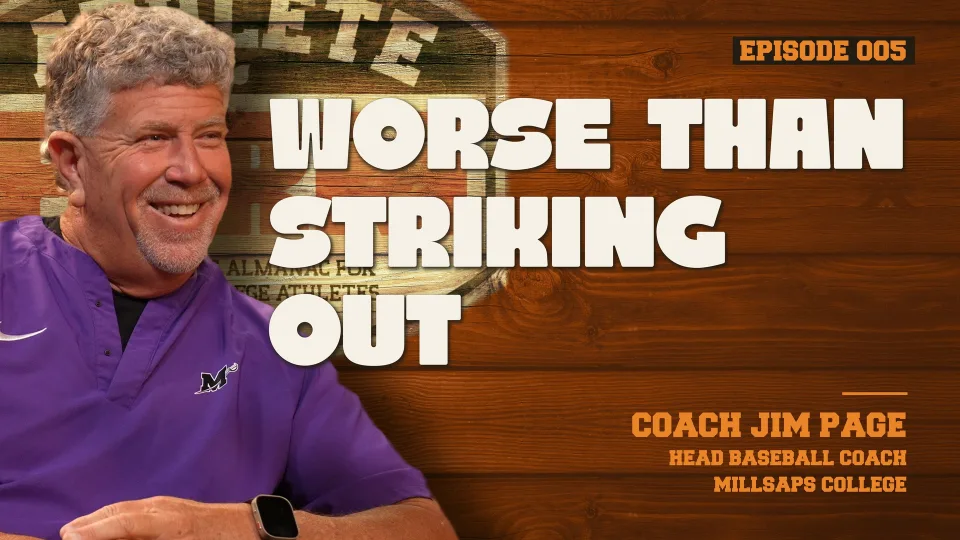
Coach Jim Page is in his 39th season as head baseball coach at Millsaps College and runs a youth baseball camp. A father of four, he calls travel ball a money grab, says high school coaches never care which travel team you played for, and tells parents the ride home shapes a kid’s mindset.
Full transcript
0:03Mike Frascogna: Hey, welcome back to Athlete Farm, a parenting almanac for growing college athletes. Today, I've got a killer guest. I've got Coach Jim Page from Millsaps College in Jackson, Mississippi. If you want to know about Coach Page, just go online and Google him. Go to the Millsaps website, and you're going to see an amazing 39 -year coaching career at Millsaps College as the head baseball coach. I actually had the privilege of playing for Coach Page as a freshman in college, is where we first met, and it wasn't as a baseball player. For one year, I played football at Millsaps College before transferring. I was a wide receiver, but I went against Coach Page's defensive backs every day. He had the best position group on the team. You could tell he was a great coach at whatever he was going to be coaching, and he was still my favorite coach, even though you were not my coach at Millsaps, but you were my favorite coach at Millsaps, and I was competing against your guys. So Coach Page is just an outstanding coach from top to bottom, them. 39 years of longevity, amazing success at Millsaps, has sent multiple players to the big leagues, has even more impressively to me run the premier gold standard youth baseball camp in Mississippi for probably as long as you've been coaching. I used to do camps in speed, agility, and quickness, and I tried to pattern them after coaches' baseball camps that were so so well run. You've trained, I've got to believe, 10,000 or more kids at this point in Mississippi. If you play baseball in Mississippi, you know Coach Jim Page and have probably been to his camp. It's impossible to find a baseball player in Mississippi that has not been impacted by you. You have an unbelievable resume. Thank you for being here today. This is going to be a lot of of fun well
Jim Page: I'm man I'm excited and thanks for I didn't know I was your favorite coach and yeah some of that I'm joking but no I appreciate it man that means a lot that that's the intro was way too kind
2:11Mike Frascogna: well it's it's all well deserved and it's all backed up by facts so it's not it's not hard to to give a great intro coach so let's there's so many places that we can start on this one this one's just going to go wild the moment I light the fuse I know I've just Just got to light fuse, get away, and then we're going to get a lot from you. Let's talk about, first, let's talk about youth baseball in Mississippi. I don't think that there's anybody better positioned than you to comment on the culture and structure of youth baseball in Mississippi. What's right about it? What's wrong about it? And if you had a magic wand, how would you change it?
Jim Page: You know the the answers maybe you know change matured a little bit I know when first it came out so I had you know a daughter that played and and both of my daughters played but then my two boys played and I actually coached them and had a couple dads that were great to where you know when it was February March April I was I was tied up a little bit and I'd make when I could and couldn't be at the tournaments for the most part and and then when it was over I would I I would jump in a little bit more. And I know at the start of it, like here's something I miss. I miss the – man, when I was a kid and everybody would show up at, you know, the Little League fields and it was family and this and you played different, you know, Virginia Hills that played at Rhodes Hill, Springfield, and just different stuff. And when it first started with the – you know, they called it select ball at first and then it went to travel ball, the name just changed. And, you know, I tried – I had a meeting with a couple of the, you know, Northwest Rankin, Little League group, and it's like, guys, please don't do this. Please, let's stay, and we can make it better in contact. Let's start a Jackson Metro League, which that actually did happen a little bit. But it's evolved, and there's no coming back. It's going to be the way that it is. And my experience, really, so I was in there when it first started. And we were going to do it one way, and then as we were going through, you know I saw a lot of stuff that just made me cringe and and throwing kids on a Friday and then again on a Saturday and then again on a Sunday because we're trying to put a little trophy in our office and knowing that that's not very conducive and I saw a couple guys this kid Shelton at Northwest Rankin that man he's throwing 80 miles an hour when he was 12 years old and the problem is he's throwing 80 miles an hour when he was a senior in high school because you know some some of the stuff that happened to their arm and that I do miss when, hey, football season, you play football, baseball season, you play basketball. I mean, baseball, basketball season, you played baseball. I think, man, soccer as well, what well -rounded athletes. And now people, I think, are choosing too soon. And I wish, man, let them play the other sports. And then there's a time, and I don't know, is it 14, 15, 16, I don't know, where, okay, maybe we get into some specialization now. And, and, but even having some time for strength and conditioning when it's time and speed and agility work, which it's always great. You know, we, we got that because we went outside every day and played when we were kids, moms kicked us out of the house. And, and now it's, you know, not as much like that. And so, so there's, and I've been away from it a little bit. Now I have a grandson who's seven and I went to a game the other day for the first time I got to see him play. And it made me go, okay, I need to get back in and get a team together and, and do some of what we do. so and it was great the guys did great and everything but it you see it and you're like well you know we could do a little bit more of this and this so you know I'm and I'm sure when I get back in it it'll be a little bit different than it was so
5:54Mike Frascogna: when we talk about travel ball now focus on baseball for for a few minutes your answer immediately was I want kids to be multi -sport athletes I want them to play different sports and I think most people agree with with that that concept I think most people go yeah that's right that's that's what I want to do I think the harder thing for parents though is that when they're in it and they where the rubber meets the road is hey my travel baseball team has a tournament this weekend and our soccer team has a tournament this weekend and my flag football coach wants me to show up for practice this this weekend that's where becoming the multi -sport athlete it's not so simple and and how are parents supposed to deal with that now
Jim Page: well look and I'm not saying I was right when I did this but when I did it did our team we had a start date and we had a finish date and the finish date was going to be like around July 1 and we weren't really going to do anything in the fall and and you know oh what about Trent well man they're nine years old they're 10 years old I get when they when it's that time than it is yes it is a year -round thing hopefully they take some time off but I wanted to do it because we had some kids that would play football we had some kids my kids they played soccer I wanted them to there's some neat things you get out of that a toughness in football as you know and then when you combine it with with the mentality and and that you know being intent yet having to be completely relaxed at the body baseball trains that and and it's it's a good thing I think now I know it's it's tough now and it's a money grab look I'm sorry if I heard anybody's opinions but it is become a you know there's this triple or I won't name names this big tournament and it's double points it's double points so you gotta get it it's october so if you don't you're you know what and there's how many national champions now or yeah we're we're yeah there's like eight of them nine of them ten of them because I've run into too many 11 year old teams and you know the kids telling me hey we won the world you know series and why yeah everybody else did too so I don't I'm not and I'm not being negative about it's the way it is right it's just there's some things that I wish you know we could control so
8:06Mike Frascogna: what do you do as a parent you got you got all these different sports you're you're concerned with and and I don't mean to pick on baseball because you can say the same thing about soccer does the same thing they've just ballooned into year -round sports what what do you do as a parent of I've got conflicts and I'm I'm being made to feel even if I'm not being told directly by the coach you know if you don't buy in and keep participating you're gonna fall behind no right fear of loss yeah that's selling fear of loss yeah that that's what that that kind of suggestion is always there under the surface that if you're not buying in you're gonna fall behind and that's not good for your kid and you obviously you want what's best for your kids so how parents deal with that
Jim Page: yeah and again I'm assuming we're talking eight nine ten eleven twelve years old around there that's this age group I'll say this and parents need to hear this at no time will any high school coach give a crud when you're trying out for that team of what travel ball team they won't know they won't care it doesn't matter it's everybody when they come in everybody's fresh new you know if you're northwest ranking you got got a plain black or gold shirt and you doesn't have northwest ranking on and it doesn't say what travel ball team you but because I would hear parents so well we got to do this because we won't make the high school team and I promised back then it was coach mcclaskey I promised you he wasn't going to pick and didn't know and told me that so there there don't let that affect well we got to keep going even at the detriment of my son's arm little league syndrome what's going on now and has been going on for a while with this stuff you know and and I guess you brought it up and it hit me it's okay there is a fear well maybe I I can't be on that team you know at the same time I'd look at it and and we were not going to do something that was all year round when they were at that age I wanted them to heck ride bikes and go if people still do that nowadays but have fun be a kid and it wasn't gonna cost any but I guess there there could be teams where hey if you don't do this we'll move on man if we're 10 there's more teams out there and maybe you'll you'll find one more suitable for how you – I'll have dads call me and say, hey, how did you do this? What do you think we should do? And I'll just give them advice on that stuff and say, hey, don't be crazy.
10:11Mike Frascogna: So what – how do you respond if a parent says, you know, look, that all sounds great. I'm on board with everything you just said, but I'm looking at my kid's high school baseball team, and, you know, they have tryouts and it's competitive. And you know who makes the baseball team every year? Everybody that played travel ball. now it is it because they were on a travel team or is it because they were more focused on baseball and just naturally better and they were ready for trouts so you kind of get back to that practical question of you know yes I do want to be well -rounded I want to be a multi -sport athlete I want to be a kid I want to ride a bike I want to develop all these broad -based skills but I also wanted to play high school baseball and I'm seeing who's making the team so I don't feel like I have have a choice no
Jim Page: and I agree like travel baseball is where it's just based on the competition now the the little league recs have been watered down because they've been cherry picked to death and and so yes like my caitlin my daughter with my grandson said hey should we do and I said kate if you don't do it now he's seven honestly at eight and I never thought I would I wouldn't have said that 10 15 years ago now yes at eight you you're you got to get on the team but then and you need to find one, and maybe Jimmy coaches, and I'll help, whatever. But find one that's going to be able to play within the parameters of what you need, because there are some of those that will. And I guess it is going a little bit less and less multi -sport. And by the way, soccer did start it. They started that year -round thing, and I was like, holy mackerel. And then baseball jumped on board. But again, a lot of it is that money part. And so long as you're taking your breaks off, it's fine. If, hey, baseball is his thing, it's what he wants, he wants to do it all year there's nothing wrong with that that's your thing you know the way you want to approach it so I think that's great yeah
11:58Mike Frascogna: that one's easy when your kid is telling you like I love it they can't wait to go to practice they're asking for more that one's easy that's easy I guess that's what as parents we all hope we're going to see in our kid because it's make the decision easy I think it's it's where you're having to read them and you're having to make the adult decision to balance things and and as the the kid doesn't know but as the adult you're you're going, man, I don't want to make the wrong decision where I boxed my kid out without – it wasn't even based on his or her skill. I made a decision. I think it's the fear of the parents is the hardest thing to manage.
Jim Page: I don't blame them. That's where it has gone to. And I wish I could sit here and give you the secret sauce to this will solve every issue because it won't. It's all – you know, hopefully you get caught up in a good group. Luckily, there are multiple type groups. And I do see things from the Knights and East Coast where they do it in the spring and summer. And, hey, they're playing football for the high school team, so they're not doing it. Hey, some of them will play a football game Friday night, and then I'll see them on our baseball field Saturday doing it. And then some don't do it. So I don't think it's – some you don't want to stress over, especially when they're 9, 10, 11, 12. And I think there's some teams out there that – there's different brands. This is going to be serious, crazy, whatever. And, you know, I'm not saying crazy in a bad way. It's just going to be 100 % in there. And there are some that are going to, you know, take the breaks. And it's just finding the right opportunity, the right group for you.
13:29Mike Frascogna: So when you're looking at, I mean, you lived it with your sons and obviously your daughters too. I'm assuming they were softball players. Is that correct? Soccer. More soccer. Played a little softball. Okay. And now you've got a grandson that's seven. And so you're starting this process all over again in a very different environment than what it was you know 25 years ago so when you're looking at youth coaches in general whether it's a rec league coach or it's a travel ball coach and what kind of advice would you give parents to say this is what you're looking for to determine you've got a good coach and your kids in a healthy environment and then where is it Where's there a line where you go, yeah, I don't feel so good about it once it tips here? How do you evaluate that?
Jim Page: Yeah, it's tough because a lot of times you learn by trial, by fire, and that's just what's going to happen. And, you know, you'll see some people move on. And, you know, to me it's hopefully these coaches, and I guess they would when they have a tryout, they would give a little talk and say, hey, here's what we're about. Hopefully they'll, you know, hold true to that. And that's kind of what I said. I said, hey, we do want winning to be important. and we do want to teach them how to lose and to come back and, you know, hey, I want to play that team again. I had some neat stories about that through Keaton and Case and them and actually had them play leapfrog one time and said, if we're going to act like babies, we're going to play baby games if you want to play. And we came back and beat that team that beat us 23 -6 in the state championship. So there are great lessons that I'm worried sometimes we're taking away now by not having a scoreboard or turning it off when this happens. happens and and that's another topic I guess with with what you're asking it is and
15:12Mike Frascogna: I'm gonna ask you about it I'm absolutely gonna ask you about it
Jim Page: and so and so with that too I would tell our parents look I also this is about development and I want it to be about fun too because one you know they always say man to do great you got to have fun but to have fun you got to do great which comes first well I can I can control one of those I can control having fun bringing high high energy to practice every day to the games every day and playing with no fear, just let it go. That's where we want to get them. The love of the game also, I would tell our parents, hey, you might play for a really tough coach in high school. I want the love of the game to outweigh, I don't want to play for this guy. You know what I'm saying? And then you leave or go to a different school or just give up the sport. So create a love, instill that love in a game that, hey, they can take the bad day I have or the time when coach chews on me a little bit because I didn't do what I was supposed to do.
16:06Mike Frascogna: Well, I think you just answered the question I was going to go to next, which was you have some coaches who run the team, and it's win at all costs, obviously unhealthy. The inverse of that is we're just here to have fun, also unhealthy in my opinion. And so where do you balance the two? But I think what I just heard from you is that the balance is these kids have to love the game, and then really, as long as they love the game, almost either extreme works. you go hey I can take the hard coach it's a little nuts we've all played for him and then I can take the really passive coach because it's okay we're we're doing I'm locked in and we're doing something that we love so is is that the answer it's it's you've got to love the sport yes
Jim Page: you do and and you know kind of a little quick story of what what I mean by this so you know we're playing and I'm seeing you know you know I've been coaching college forever so you wouldn't see see this on a college game because we'd pick him off but there's a runners at second and third or bases loaded and that runner second base is halfway to third jumping around doing whatever well we're literally nine years old first year we're pitching and I told the parents look we're going to do this so I always try to do that so they don't you know what are we doing I am going to let you know or you know so we're going to pick that guy off at second but what's going to happen is the first 24 times we do it we're going to throw the ball in the center field yeah they're They're nine years old. He's going to spin, and he's going to throw it. But after we do it over and over again, all of a sudden, we're going to, so I'm telling you, we throw it in the center. We throw it in the center. We guys jumping off. Our guy breaks, catcher drops his mitt. Kid spins and throws it, and he throws it in the center. The guy would have been out by 10 feet. And I'm just laughing going, and little by little, the misses are a little tighter. And all of a sudden, this is true. We're nine years old. We're in the state tournament. Second and third, both leading off big. We spin, pick the guy off at second. The guy at third started to go back when he spun and then started to run from home. And our second baseman threw the ball home, and we double play. It was second and third, one out. And we're up by one. It might have been the last inning or second to last. And all of a sudden, they're out. That happened a few times. I probably coached three or four different teams. Two of my sons weren't on the team when I was younger, and I couldn't handle the energy to do that. So that's kind of some neat stuff that I think we're trying to direct at. if we're willing to and you got to have the right parents and
18:26Mike Frascogna: see that all right so a couple things really important there I think that indicates a purpose -driven coach where you said you know we're going to do this and I we could just take the you know oh we're just we're just having fun it doesn't really matter no and we're we may lose because we do this because it's a bit of a risk but for the long -term development of this player we're doing it for a reason and it's going to to click at some point so you're you're not if you're a win at all costs you go we're not going to do that we'll just win somewhere else but you're looking at there's a longer horizon that you're playing
Jim Page: 100 and you know it's funny I had two dads and I man we're we is we got really really good but they did not understand what I was doing they they actually accused me of not taking this seriously enough we're throwing balls in the center field why is he doing this in practice and why aren't we trying to do this and that and one of them became he was he was a critic and then he understood he came to me one time and he said you know I didn't understand part of it was when we started doing those little things right and anyway he said I didn't understand what you were doing at first and he goes now I get it he actually helped he said that to another dad that all of a sudden he joined the team somebody moved he joins the team I was skeptical because because he was a little hard -nosed dude, and explained it. Yep, I'm in, I'm in. And then when I did what I said, hey, we're in a championship game. I'm not bringing back a kid that threw yesterday. And we're in a championship, and we've got three kids that haven't thrown. And they're number 7, 8, 9, or 9, 10, and 11 on our pitching depth chart. And we're going to throw them, and they're going to bring back their kid. And, all right, coach, that's what I want. Man, the first tournament, which I wasn't there, and the assistants were like, he was going nuts. Why are we throwing these guys? and my that dad said hey coach page told you we're going to get on this train and this train's going to go from here non -stop to new york and he told you it over and over again and you said okay and you bought the ticket and got on the train and we're halfway in new york and where you start questioning why we're going to new york he told you it's what we're going to do so so you run into some of that stuff and you know it's it's but over the long haul it's really really good
20:35Mike Frascogna: but I I like that too because I I believe in that philosophy myself it's a you've got to at the youth level you've got to bring the parents into the process to the extent that they're interested and maybe if they're not interested you have the wrong parents but you want to bring them in and lay out a vision of why are we doing this where are we going we're going to new york it's not like we're going to drive around and have fun no we're going to new york yeah and it sounds like you you were very intentional about doing that you wanted your parents to understand see I think that that's the sign of a of a good youth coach right there of of just help get the parents involved where they're they're allies not adversaries yeah and that's what you did yeah
Jim Page: and the last thing you want is somebody that's not gonna fit with with your you know you go buy a car you look at you say hey what car suits me and fits me my budget my whole the whole thing and it's the same thing as you know choosing the the the team that you want to be on but it's also the coach choose yeah this kid is the best player that would be on our team but if it doesn't work look nfl nba major league baseball they talk about culture all the time I mean they'll sit there in football that's why I respect football they'll run off a stud player because he doesn't fit in the locker room
21:50Mike Frascogna: the team cancer you
Jim Page: know 100 man and those those coaches get fired and how much more important important is that and it is in the in the little egg thing instead of the complaining and griping and and then again the kid hears it on the way home and now he's negative and that and things like that one it's no fun it does not create a fun positive environment that is important well
22:13Mike Frascogna: that's that's going to be a tough pill for some parents to swallow who are gung -ho love their kids will do anything for them to hear that their kid may not get picked to be on a team because of the way you act I mean that's the reality but what so what are you looking for from a parent forget the kid right forget the kid let's say he kid's a solid athlete coachable good kid but then you got a parent here what are you looking for in a parent go that's the kind of parent that I do want because I it's a package deal yeah
Jim Page: no and you know part of my I see this as my job and it's probably easier for me because I'm a baseball coach but my job is to to get them better get them to they're here they want to make the high school team some some of their goals to make the high school team some of it's to play college ball some of it's hey I want to get drafted one day we we've had a little bit of all that with the teams that I've coached and so my My job is to do that. Man, I want parents that are going to make it easier for me to do my job. And fortunately and unfortunately, they sometimes have more to do with that than I do. And that's that ride to the ballpark, that ride home after a game, a tough loss. If the kid went over or had a big day, how they treat that and handle that makes a huge difference with the mindset and mentality that kid's going to have when it really does. because it is nothing's life and death now you know it was for me 30 years ago now okay but it is very important it is huge it's what we do and and you if you don't have the mindset for it you don't have a chance so
24:00Mike Frascogna: what does healthy parenting look like
Jim Page: you know I tell you what I was blessed growing up as a kid man my mom and dad we I would go play I would I would have a really good game and I got in a car and it was hey good job where you want to go eat good job let's get some ice cream I would have a really bad game and I'd get in a car and I'd be upset and stuff and all my dad would be like is hey you know keep your head up get them next time let's go get something to eat let's go get some ice cream and and that happened all the time and my mom never got too excited my dad never did and it it you know we teach we we teach all man let's stay right here let's don't get too up we do good don't get too down that's a roller coaster now our emotions kick in and then they'll kick in before that moment even happens and and they're you know there's some neat things to to you know hey if I'm the guy that as soon as I get that hit big big moment at bat my moment's really over and all I'm doing is looking for that moment again then there's another type kid they don't want to be in that moment they're nervous I got to get a hit or what is everybody going to think and say he does get the hit now his moment starts hearts and he's calling people for two weeks and he rides that two weeks but he didn't want to be in that situation and he wants to live on that one well the derrick jeter's the world man they want to be in that box nolan ryan with the ball in his hand when it's tight when it and I really believe something was good that happened to them when they were growing up that allowed them to have that I had no fear of failure when I was up in the box I I learned later I didn't know why Why my dad was – sometimes it would frustrate me. But he did say something to me one time. I struck out with bases loaded to end the game. And, of course, I get in the car. I think I'm 10 years old. I'm crying. You know, I lost the game for the team, even though there were 26 other outs that were made. Okay, mine was the last. But I'm still – and my dad said, hey, you know, what's wrong? And I didn't answer him. And, boy, he was tough. And he was like, you better answer me, boy. And I said, I lost the game for the team. And he goes, no, you didn't. And he goes, do you know what's worse than striking out with the bases loaded? loaded and I was like no sir there's nothing worse than that he goes no there is never to be up to bat with the bases load and that I didn't understand it when I was 10 but later on I was like holy mack and I've actually used that to some of my college players when I saw them in the bullpen and which we're fixing to play for the commerce championship to go to regional and you know the pitching coach run over hey man he's throwing balls all over the place you can tell it's a little jittery and and I went and told him that story and one of them was David Hutzel and and he ended up shoving it in Conway, Arkansas, and we win and go to the regional. And, you know, I always would like to go back into crystal ball. What if I didn't have that story to tell? So my dad and mom both helped me along the way having that attitude. They didn't get too excited when I did good. Hey, they said good job. But they didn't go crazy. And then if they had have, I bet you I would have started playing for that approval. I'd be up in the box. Man, they're going to love me more if I get this hit. Well, we know that's not true now at my age, But when I was 9 and 10 and 11, I probably didn't know that. It's eight years old. I would have reckoned that as, well, that's approval. I'm playing for their approval instead of help my team win, focus on the little things, square the ball up, whatever happens, happens.
27:17Mike Frascogna: I think it was really interesting before we actually went live here and started talking on this. You were telling me a story about a player you've had in the past that was real up and down. So, stud athlete, but was up and down. And just tell me that story again. What did you ask him?
Jim Page: Yeah, we were out, and it kept happening, and I would see it. He would get way too excited. And what would happen is, well, this is the deal. Like he was leading us in hitting, but when bases were loaded, he was 0 for 11. He was hitting 0 -0 -0 with bases loaded. And, man, you can hit a sack fly and get an RBI, and it doesn't count. You're not 0 for 1. It's 0 for 0. And you could see rollover ground balls, which means he's flying open, which means he's trying to do too much. Well, this was kind of a little consistent thing. And one day we're out in the alpha walk, and I said, hey, man, I got to ask you a question. And he goes, yeah. And I said, when you were playing travel ball, when you were playing high school, when you had a really good day, did your parents and grandparents, like, go nuts? And he goes, yeah, man, they did. And I said, when you had a tough day and stuff, were they kind of – yeah, they were a little bit. And I said, I know, you play the game like that. You play the game. And so I talked to him about, you've heard we can't get high, we can't get low. Oh, and these kids know stuff. Nowadays you have to tell them the why. Because I can say here's how you hit, you know, and we do do that. But nowadays it's a little bit less of that because they can go on social media and get all the information they want on that. Now it needs to be more about the why they do things because there's a bunch of, quote, hitting gurus and pitching gurus all over the Internet. Some of them are good. Some of them, no, let's don't do it. You know that one dude that puts a ladder over his head and swings and falls down and makes fun of all the stuff that's going on there. Yeah, those are hilarious. No, it makes me laugh like crazy. But that's the thing of, you know, parent -man, just be there, you know, support them, cheer for the team. I think it's important to cheer for the other kids. I think it's, you know, if my kid's not playing, just getting up and walking away. Because one day that's going to happen. And it is – we need to be teaching them, you know, The best, greatest parts of America, we're always, it's what can we do for our team, what can we do for whatever, and the team's bigger than I, right? No team and I, or whichever way it goes, because I joke around and say there's no I in team. You know, sometimes I want to get a t -shirt, but that stuff's being attacked now with taking all the great morals and character -building things in athletics athletics and and that's what I feel bad for these kids now that I didn't have man I had guys that were doing it for the team ronnie lock cuts his dang finger off so he can play in the super bowl to help his team win the super bowl are you kidding he just yeah it wasn't you know whatever it was end of his pinky yeah he couldn't and he wasn't gonna be able to play so he just off you know and nowadays it's a little bit more of look at me and look at this and they have to fight through I didn't so I man I was a step ahead of them in that regard so
30:28Mike Frascogna: so going back to your parents, I'm curious because I think that's really great advice for parents. You maintain an even keel, therefore your kid will learn that and emulate that in high -pressure, high -leverage situations. 100%. Do you think your parents just naturally were even keeled, didn't really care about sports that much, or were they like the rest of us who were all jacked up when our kids were doing well and they just suppressed it? which one was it
Jim Page: now they look you know I don't know that's a great question I've never thought about that my mom was was meek and and humble my dad was he got in a couple fights when we were kids even and knocked my mind and my brother's head together one time when we wouldn't mind he was you know he was the old school it was real old school back then and he was in in the military growing up his brother was a prisoner of war in germany and and yeah it was they were a a hard -nosed family and and I would have never thought you know he would he would be a guy that went crazy but but it surprised me when I did bad he didn't he didn't you know reprimand me severely like he did if we broke a window in the house sounds like it was a conscious decision separate Yeah, I think so. And he played college baseball. And so at Shepherd College and played football as well. And so maybe he was ahead of that thing. And look, we all want our kids to be. I had kids playing. I want them to be. But I do. I have to. Because I get excited when my guys at Millsaps go, hey, that a baby? You know, whatever. And because I have to do that because I'm going to get on them when they, Not when they fail, when they make a mental mistake from lack of focus or concentration, we're going to get on them. But that's something I did have to suppress. Now, when my daughters did good in soccer or my sons played soccer or something, I'd go a little bit crazy and act because I didn't know any better. It was more fun for me to watch them play soccer than it was to watch them play baseball.
32:35Mike Frascogna: You probably know too much in baseball. Your brain can't turn at all.
Jim Page: No, it was like one time, Keaton, in the fourth inning, you took your hat off and scratched your head. Why did you do that? why weren't you focused on you know which is absolutely insane which I'd have never done that to your kid but I did to mine so I've made the mistakes and I was better with my second boy case learning from my mistakes so look it's easy parents and it's it is easy to to whatever and it takes a little work like you know it does anything to it's but it is better not to lie especially if they don't get a hit you know hey if they don't run out the first base and man if I I did that my dad I never did that because I knew my dad would that's when he would hammer me if it was something like that lack of effort lack of hustle oh yeah he's gonna be all over me and I learned that when I was six seven and eight growing up no matter what we did he'd always say when you cut the grass better than every kid on the street does and I always thought that was crazy when I was cutting it but all of a sudden I found myself making sure I didn't miss you know I was keeping my line straight and all so there was some things I was fortunate at
33:39Mike Frascogna: that and that That was going to be a question I was going to ask is, is there ever an instance where a parent does need to drop the hammer on their kid after a game? And I think you just gave me one of them. It's an effort issue, not a results issue, but it's effort. Is that?
Jim Page: Effort, 100%. So getting on a teammate, being a bad teammate. Like, look, I think we might have said, it was either off air or during this, the culture and how it's so important they'll throw a – they'll kick a guy that's making more than the coach is making off the team and get rid of a star because you can't destroy that locker room. Man, baseball, man, if I miss a block in football, the only people that know are the running back and my offensive line coach. I make an error at shortstop, everybody sees. And it's not like you get to run in a huddle and hide and then run out to another play. They're looking at you. you and and and so you know we hey if I'm the pitcher and he makes an error I want that pitch say so what here comes a ground ball like back to you build his confidence back of pitcher walk somebody and I'm the third baseman I say hey so what get me a ground ball and we'll turn to double play for you right here that that's so important and it needs to be taught it needs to be taught in an early age it's valuable in the big leagues you know the clubhouse and the whole deal but that is how we are to build each other up outside of baseball. You know, I say baseball is the endless pursuit of perfection that we'll never attain. You know, that should be our Christian walk. Endless pursuit of perfection, we'll never attain it, but we're in pursuit of that, and that comes from both physical skills, hitting in the cage, but it is also how to become a better teammate. And every college coach in the country, look, I've been at a perfect game in Atlanta and watched a coach, Coach, I'll say, from an SEC big dominant school, was coming to see this stud and wanted to sign him. And he played catch to warm up. And when he walked away, one of the kids on the team, they were 17 years old, wasn't one of their better players, did a high five, and the kid just brushed him off and walked past him. The coach closed his book and said, yep, he's not for me. Wow. Because he didn't shake. Give the other kid a high five. We don't want that. And fortunately in baseball, there's enough good players out there that are good teammates, do everything you ask them to do, want to win. So that's just as important as what travel ball team you play for.
36:07Mike Frascogna: Well, and this also sounds like these are the kind of things that are best learned at home, too. It's not, like you said, there's plenty of information on hitting out there. And, you know, your dad doesn't have to be a hitting coach. Your mom doesn't have to be a hitting coach. But these base level skills of communication, of being coachable, of being, you know, respectful of your coaches, being a good teammate, this really becomes the area of parenting. I don't worry when I watch my son play soccer that I don't understand soccer. I don't try to coach it. I don't understand the technique. It's not for me to say. I'll screw him up if I try to. The coach coaches. coaches but it is my job to coach those things you just said you want to see that that's the purview of the parent 100
Jim Page: and everybody can coach that we all know what's what's you know right and and we you know hey we can get caught up in it's my own kids so what's best for man what is best for him is to be a good teammate the last thing you want is the kids on his own team root against him because of how and and you know over the years I've seen that a little bit we we had a guy drew Drew Respis, man, wasn't one of our best players at Millsaps, didn't get to play a lot, greatest teammate ever, came back a fifth year to maybe have a 20 % chance to DH every once in a while. And, man, I get tossed out of a game. We're going into extra innings. I'm sitting behind the bushes. And Cody was our – that took over because I'm gone. And this was neat. He had to bring in a position player to pitch. Now we lose our DH. so now pitchers when the pitchers come in they can't hit of course and drew respice ended up being essentially the last one on the bench and we're in the 13th 14th inning and he came in to pinch hit with a run on first base two out huntington had just scored to go up in the 14th whatever 15th inning and respice comes up and I'm sitting here watching going this is so awesome And the guys in the dugout were cheering him on like nothing I've ever heard. He gets two strikes. He fouls off two balls. He ends up hitting a bomb. He had a game -winning home run. And the team went berserk.
38:22Mike Frascogna: Not because they won the game, but because of
Jim Page: him. It was because it was him. Like, look, Hunter Owen played for me. He had to walk off. Everybody went nuts for five minutes. This lasted for 35 minutes. They ran and grabbed shaving cream, smeared it on his face. They were running. it was unbelievable yeah and and you know he had a quote and I had that quote up on my door about you know somebody an announcer guy asked him what were you thinking as man I was just trying to battle for the team trying to create another pitch if I could draw a walk get the next guy up and you know move the the the tying run to you know second everything you would want a kid to say and he said it because he lived it yeah and and he's got the greatest memory of five years of baseball I didn't hit I well I did hit one walk -off it wasn't a home run in college I didn't get to hit a walk -off home run in college and I really believe good things happen for people that do it the right way I don't think I don't think they get they get it because they do it right I think god asked us to do it that way because it's going to work out not all the time but we're going to get blessed at some point in our lives when we do it the right way and respice man I still talk about him today you know how to head this big when he was there and got the best -looking wife and three great children and has an awesome job. So I couldn't be sorry. I get excited when usually I cry when I talk about Drew Rasmus. I didn't do that today, so that's good.
39:46Mike Frascogna: Well, that's a great story, and that's triggering a lot of thoughts that I have, and it's the value of being on a team, whether that's at the collegiate level or that's down at the youth level. There's just something there about being part of a team. so with regards to college sports and college baseball you're at a NCAA Division three school there's you know there's lots of levels of college sports some people aren't as tuned into that as others but there's lots of different levels of college sports one of the things you hear parents youth sports parents talk about you'll hear them say oh well we're doing this because you you know, we're going to get a scholarship. Well, how do you respond to that? Because what's the goal of the scholarship? I mean, I oftentimes point out to these families, I'll hear that, you know, we're doing this to get a scholarship. You're like, why? Y 'all can send your kid to college right now and pay for it all in one check. You don't need it. So it's not like your kid's not going to college if they don't get a scholarship. scholarship what what what are they really chasing and what should they be chasing because they should want to go to college and play sports because it's it's a great thing yeah
Jim Page: business businesses want those kind because they understand team teamwork being a good teammate being you know the team is bigger than than myself the company needs to be you know it's the same so that they've always forever and still do to this day look to hire you know college athletes you know it's it's funny I used to tell because before baseball had 11.7 scholarships so they man if you were getting a 40 percent ride that was pretty good and they were still chasing that and I would say look if it's about that if it's about the scholarship I would suggest you get into ACT prep classes and make that a priority make sure he's doing his homework he's doing you know you know hey he's going to practice yeah make sure he's doing this because there is a better chance to get a bigger scholarship now you know times have changed with that but but it still it It goes back to what are they chasing. And, you know, it's different for everybody. I'm not saying do we live vicariously through our kids at some point. I'm sure there are times when I have. My granddaughter had a singing thing for Northwest. She's 11 in junior high and was a singing thing. And I sure thought she was the best singer in there. And you couldn't even hear because there were 30 people singing at the same time. But I temper that with wisdom. But, yeah, but there's a – you want what's best for them. You want to do that. I know this. I'd get into levels. Man, last time we played a Division I, we beat them 17 -4. I'm sorry, 17 -3 at their place and faced a pitcher that hit 101 in the Cape Cod League when nobody was throwing 101. We didn't face a fastball below 96 miles per hour the whole time. And Hunter Owen was on that team. Hunter Abrams, some of the guys you know. And, you know, we pounded them. So one thing I would suggest, and this is probably not the question, but it brings me to something that's important. Try to find a place where you can play as soon as possible. because there there are times where I know you know hey a guy went to mississippi state because that's where he was go boom and you know a year later he's he's I mean he's at the game but his chest is painting maroon with with m on his chest in white and he's not you know playing and so and it's funny down here there's a little man up north those guys that they'll they want to play college baseball and it doesn't matter where and when you play some of those teams some of them have had guys that like I know it was like wisconsin no it was denison I'm sorry they had like 15 transfer division one guys on our team they cut 12 transfer division ones so so it's it's it's a wide variety but it's you know look and I know that is definitely another one to find a region you want to go in and find a hey coach yeah I could see myself being with that system that organization his demeanor for for four years and and now where is it that I have a chance to play? Well, I know that's not where the question
43:41Mike Frascogna: was. But even the chance to play is kind of down the list, because it's not really about a scholarship. And it's not, I would say it's really not even about whether or not you're going to play, because take your example of Respus. Drew. Drew, who comes in, you know, he was not one of your main players, but he, you know, he has this great moment. Yeah. If it was about playing time for him, he would have been on your team. He would have gone to look somewhere else and been there. So, So, you know, how do parents navigate that in advising their kids? I think where you got to at the end was find a region you want to be in, find a coach you like playing for, find a school you like being at that maybe even if scholarship's not there and playing time's not there, you want to be there anyway. Yeah. Is that fair advice?
Jim Page: Yeah, I think 100%. 100%. And, you know, hey, there's that blue chip high school kid, you know, where, like, God just blessed him. I mean, he could fall out of bed and hit, and he don't even have to work. You know, 10 % of the big leaguers are like that. They were going to play in the big leagues from the time they were – Bryce Harper, the time he was 14 years old, you knew. But, honestly, the 90 % of the ones that work and get after it and do those things. And so, you know, when you're looking at those kind of guys, it is important of where I get to play as soon as possible. You know, we've had a couple kids get drafted, a few. You, Kennard, and Austin, and Wetzel, and others. And, you know, if they had gone to a Division I, it might not have happened. Because, you know, baseball is a sport. Football, you can redshirt and get bigger, faster, stronger, increase your bench, your vertical leap, your squat, and you'll probably become a better football player. Baseball, those things need to be done, but you have to play. Yeah. And that's why we play a bunch of JV games. We call them JV games. It's not really JV. It's developmental games. games but they can practice all they want to to deal with 98 miles an hour and I'm in a bump and dealing with the emotions and you hit in the cage all the time and now everything's open and I have to create my own tunnel vision because the cage creates it for me that's why parents they got to hit on the field don't just let them hit 500 cuts in a cage every day now you get to the field and they think well he doesn't hit as good yeah no he's now everything's in the open so so anyway there are things like that that are important now I told you I would do it one time now I kind I kind of forgot where I was going
45:57Mike Frascogna: with that. No, that's fine. Well, we're talking about playing time. And I think you raised some interesting questions in my mind, too. I think there's got to be, I don't know how you get there, but you've got to have a realistic expectation of what can I do here. And so I 100 % agree, playing time is important. It's hard to get good or better at a sport if you're not getting playing. If you're not getting reps at practice or in the game, you've got to get reps. reps but there's there also comes a point and I'll use my experience where there wasn't going to be anything next for me so when I went to notre dame for football and walked on if if I was there only for a scholarship well I'm not getting that and if I'm only there for playing time well I'm not going to get much of that either so but I'm not going to leave because it goes to what you said find a place you want to be find a culture you want to be part of and then you dig in and you're part of that because at this point I was still getting reps in practice you know you're going against our first team defense but I'm not trying to go anywhere after that in my mind I already know you know I'm not going to the nfl this is a termination point and so even at that point the reps game reps were not we're not even the point for me
Jim Page: hey I'm growing up as a kid I wanted to play football at notre dame that was my I didn't want to play baseball no I wanted to play football at notre dame I didn't know that and yeah I I couldn't run like that. I didn't. You had a weapon. Your speed was a weapon. And you hit on it when you were talking about that, because I probably didn't say it quite well enough. But it's where do I have a chance to play at the earliest? And look, we get asked that question, Coach, when do you think? And I'm honest. I actually err on the negative side. I'll say, look, you've got to get bigger, stronger, blah, blah, blah, by your junior year, hopefully. Well, I will say that in what could be sophomore year. Every once in a while, a Matt Dowd, it was his freshman year. something happened and but what he did is and this is what's important to that if you think it's your junior year you better be working your tail off because something happens and you get that opportunity now it's yours to take or nope we have to move on and and that's really really important so I'm I'm developing still putting into the team making myself as good as I can possibly be but but it's more it's more of that of where do I have a chance to play the most and And, hey, there's no doubt if my family, they didn't. You know, I was in Northern Virginia. But, you know, I know this. There are kids that know it's – I'm going to play at Ole Miss or Mississippi State or Bust. And if not, I'm not good enough to play there. And they could – you know, they might – could have played at a Millsaps or somewhere or a Juco. And, nope, it was they were going there and they'll join a frat and have fun. Hey, I get that. That's part of the gig. You're no less of a person because you played and no better of a person because you did. I lost a catcher from Madison Central one time because of that. and that killed me he would have started for us as a freshman yeah and he just went there and joined a frat told me he was going to do it
48:53Mike Frascogna: so how do you how does how does a parent assess realistically where their kid is you know I you know of trying to set what what should my expectation be that's a tough one because there's so much parenting emotion in it how do you how do you navigate that and how do they determine what what's realistic yeah
Jim Page: and and that's man how hard That is very hard. You know, it's like a coach that argues all the time with an umpire, and he didn't really think his guy was safe. He just wanted it to be safe. And sometimes we want it so bad it blinds us to the call. I had a buddy that was a coach, and I said that to him. I said, look, you get upset because you think he was out, and he wasn't. You just wanted it to be that way, and it clouds your vision. That can happen to all of us. We all love our kids. We all want what's best for our kids. We all focus on, you know, their feelings so much where, in essence, sometimes it's good for them to have to overcome some stuff at an early age. I think it makes you stronger, you know, later on when when life gets like that. And and I had something and I kind of forgot. Sorry about, you know, that. What were you saying exactly? What was it? I don't know. I know I can do that. Everybody out there is going, what is he talking about?
50:05Mike Frascogna: It was really good. I mean, the direction you were going was was great. And then you confused me. me all right let's just
Jim Page: jump on other stories all
50:13Mike Frascogna: right that's good let's let's reset let's just reset and let me ask you a different question so when when you think about the greatest players in sports you know pick whoever you want whatever sport oftentimes their background is some story of growing up like really tough like growing up tough and they just you know they they made the best of what they could they worked their butts off you know and and became you know the greatest of all all time whatever whatever sport is it is it possible you I mean you're at a you're at a a college that has kids that come from you know some fairly fairly well -to -do backgrounds and just some affluent families and you know it's not an inexpensive school to attend is it possible to come from a a more comfortable background and to become that really high level greatest of all all time or does it require some hardship because you just said a minute ago you know we grow from failures and hard things to be the greatest of all time do you have to do you have to start in the dirt can you come from affluence yeah
Jim Page: you know I think there might be a percentage thing we could talk about later where well the percentages say but then there's a christian mccaffrey like I watch that guy run all over my commander's letter play I'll play I'm a because because I'm from Northern Virginia, man, that guy is tough as nails, runs hard, loves contact, punishes the defense. Like, he's going to punish as much as – like, it's a mindset. Well, he's a silver spoon a little bit from what I hear. You know, I didn't see him grow up, but that's what I hear. And, wow, what a tough dude. And so, I don't think you can sit here and label it 100%. Now, you know, what are the odds? You know, talking about that, at first I thought you were going here like a Michael Jordan who gets cut from his high school team. him as a freshman and a sophomore adversity yes boy thank gosh he didn't quit right we would never know Michael Jordan you know that that was unbelievable he's got tennis shoes he's got his stuff on baseball equipment now that's how big that football equipment yes and he got cut George Brett I heard got cut when he was in high school and he's in the hall of fame we so so what great thing you know and stories that that are there are precedents that have been set to to encourage people, hey, don't give up, don't give up. You know, there was something I was thinking about, about the parent thing with knowing. I know I'm going back to the other question. This is where I wanted to go. Here's what's cool. There's so much data out there now. Like we just got, because of our camps and all that stuff, we get some recruiting service that's really big time. They're giving it to us for free because of our camps and stuff like that. But as they took us through a demo yesterday, man, Man, they sit there and can show you where your son, daughter will be ranked on a national average, on a Mississippi South region average, from throwing to hitting to running. And I'm sure they do that in football as well. They have the two, three, four stars. It shows you where you match up. And now there's always a story of a one -star guy, and now he's a star in the NFL. But, boy, if you put all your eggs in that basket, that's probably 0.3 % of the time something like that happens. and so you have to weigh that but that is neat that there are things out there now that will help a parent yeah I think my kid's the best on the team and and it's more I don't really see it I want it like I want that guy to be out and and so there are things that can help ground us and which I think is good even if we don't feel like that because hey a lot of there's some dads and moms out there that are harder on their kid I don't think he's gonna know whatever Maybe some objective data. Yeah, that is out there. And I'm not saying it's 100%. I know it's a lot better now than it was because we get the data, we go check out the kid. Some of those resources, companies out there, you're like, yeah, they're spot on. And there's some that are like, no, they're taking, you know, high school coaches used to do this a long time ago. Whoever my best player was that year was a Division I guy. Well, one year that's true. Another year it's not true. And so it takes out a little bit of the guesswork in that. Never be perfect, but it can take it out. And then, hey, some kids will develop later as well.
54:23Mike Frascogna: So let me ask you this. Being a college baseball coach and coaching your two sons in baseball growing up, keeping in case, what was their expectation of playing college baseball? Was it just kind of a given this is the path we're on? I mean, dad's a longtime college baseball coach. coach, we've obviously received good instruction growing up, or was it ever in question?
Jim Page: No, you know, and for them, it was a lot easier, I guess, hey, my dad's a college coach, and it wasn't like, hey, I'm the college coach at Ole Miss, Southern Miss, Mississippi State, where, okay, I might not be good enough to play at that level, and hey, Millsaps is good, they, both of my boys came there to play, neither one of them started as a freshman, And, you know, I did have one senior one time come up to me. He was actually a junior at the time and said, hey, is your son, this one, not playing because his last name is Paige? And I started laughing. I said, well, you know, I try to not, you know, do that. I'm definitely not going to favor him. But I try not to go – if I'm going to air, I'll air that way. And he looked at me and he said, we need him in the game. Can you please pretend his name's not Paige? And I just walked off.
55:35Mike Frascogna: Which is what you love to hear. That's what you wanted to hear.
Jim Page: And if I air, that's how I'm – I don't see through rose -colored glasses. classes and I did the same thing with my nephews and wasn't going to start them and both of them when we did the eval everybody on the team had and they were really good they were really good ball players and everybody had them on starting lineup and I had to well I gotta you know reaffirm you know or make sure I don't do that you
56:00Mike Frascogna: say everybody had them on starting lineup is that your assistant coaches or do you have players we
Jim Page: we do a ranking so we just did it we just just computed it yesterday so at the end I've done this forever at the end of every fall and then we usually do it right before the season starts let's say we have 25 hitters we will have them rank 25 based on the inner squads we've done what they've seen the coaches rank them too individually like and but the players do and it gives if me and you are teammates you I would never know where you ranked me right they'll never find that out and and so but what there will be is a team average and so you know you might be ranked number one I might be ranked number eight based on in my votes your votes could be anywhere from one to five and some years at all this year it was nuts we got a lot of young people and boy it was guys one through eight at some point one through seven at least had a one ranking with somebody usually it's two to three might get a rank and then it goes to more two to seven the guys will fall in that and then it goes to three This year, which is good. It's good for us. Where did you get that
57:06Mike Frascogna: from? That's a really cool system.
Jim Page: You know, man, I did it in 1990 -something. I didn't invent it for sure. So I'm sure I heard it from somebody, had no idea. And I was like, whoa, that's good. And for me, it's good for multiple reasons. And I tell the team this. One is, man, I might have this kid ranked 16th. But the whole team and all bunch of them are 8th or 9th. Man, maybe I'm missing something. Maybe. So I'm going to take a deeper look. Conversely, I could have a guy ranked ninth and the team average is 17th. Whoa, I need to take a look at this. But then it's also, hey, you ranked yourself 11th and the team had you 26th. Do you
57:52Mike Frascogna: ever have those conversations with players to review that kind of
Jim Page: ranking? Yeah, I'll just put, hey, is this really realistic? Is this where you think you are or is it where you want to be? because we were asking you based – and, you know, we also have stats for all of it. Now we say don't go just by the stats. He hit this, he hit this, or his slug is this, his slug is this. Base it on what you see. Now when you get this conglomerate of, man, there are four guys, I don't know which order. I know they're here, but I don't – now use the stats and what's ever important to you. So, for me, it might be base on ball strikeout ratio. Slug will be up there. You know, hey, if I walked once and struck out 12 times, that's not going to – You know, you're probably going to slip based on those four I'm looking at now. But that's different for everybody. Hey, how do they base run? You know, we're looking at offensive only that. Now we do catchers ranked on defensive ability only. We rank the pitchers. And it's neat to see who thinks where.
58:48Mike Frascogna: Yeah, I think allowing the players to have some say so it gives them a buy -in into that final lineup that I had input here. and you know and even if somebody tried to sabotage it and they come in and go you and I are competing against one another and I'm gonna rank you 25th and me one but still on the average it's that's gonna wash out
Jim Page: yes yeah and we throw the low throw the high oh now and I look for that I really do look for that now at this level that's it's probably happened twice yeah if I've done this for 33 years it's probably it maybe has happened twice as far as that now somebody putting them up a little higher hey we have the converse like there's a kid right now in his ranking everybody put him as the number one hitter and maybe the number two pitcher I can't remember he's a two -way guy he had written himself fourth hitting in in six pitching and and he is a humble guy he is a whatever he's also the guy I want on the mound when something's up and at the plate does his character have something to do with his performance that makes me want him to be the guy his parents are great don't get too high don't get too low saying it really from me meeting him I'm like wow that's where this kid gets it because he stays even keel as well so all my advice when we we talk and stuff is it's it's based on what I've seen for 39 and even three years as an assistant coach 42 years college coaching and the camps that I've had and the little leagues that I've had and the phone calls I'll get from at times from parents I don't know that one one called me this was many years ago so she probably won't be listening to this podcast but it was like Like, hey, my son got moved from the second hitter to the eighth hitter, and I'm worried about his esteem, and what should I do? And I said, this is what I would do. Have him look at the three kids that are sitting on the bench that aren't getting a start. See how they're handling it and make sure he's handling that better than they're handling that. And I said, because your son could be that kid. And there was silence and, okay, thank you. Change the perspective. Yeah, and, you know, I wasn't trying to be mean. But that was my first thought. Wait, your kid's still starting. What about those three kids, four kids on the bench that don't get to start and get their one inning or one A.B. every once in a while? But yet we want them to be good teammates in the whole deal. So that's where that comes from.
1:01:08Mike Frascogna: So you told me this before we started. If you would retell the story, and I know you didn't have the exact scripture verse maybe totally correct, but you were giving out scripture at a it was at northwest rankin and you had given verses to the players there was obviously a lesson behind each one and then at the end the parents were there and you gave one to the parents which was got got everybody's attention so tell me that story again coach
Jim Page: mcclaskey when he was the the co -chair he asked me to come speak to their their you know banquet their their you know season opening banquet in january or whatever and so So, you know, I went through a whole bunch of stuff, and we were talking about being good teammates, and there's some scripture along that that, you know, I'd like to put up. And, you know, including, you know, like what, let us not grow weary of doing good for the proper time. We'll reap a great reward if we do not give up. And there's some neat lessons in that at the proper time. Guys, you might, you know, we say you're going to get back what you put in. Well, you know what, there's some guys that are going to leave my program that put in more than they got back. But I'm telling you down the road, and I've had someone call me, me coach you said this you said down the road and it happened and then you know at the proper time so that so there's that if we don't give up so that is guys this is why you keep going keep going keep going so so there was some of that with the players and and I had known because my kid was had played there and I've been around I would go to watch a bunch of the games because I live right down the street and I would hear the griping and complaining at times and and so I just said parents you know they were all clapping right after I said those and I said oh hang on I got one for you guys and and and I said let no corrupting talk come from your mouth only that which is good for building up so it may give grace to those who hear it which is the important man we're supposed to be representing the kingdom of god and if we're sitting there doing that that that's the example we're setting for the for the people out there that are lost that that's who we are that we trash each other that's why god says man he doesn't like gossip he doesn't like like this and so when I said it it was pretty like it was like they went from took and you know wives hitting husbands and you know and I told you you know whatever whatever and so afterward man coach mcclaskey and them came up to me and and bradford coach bradford and parvis and those guys and they were like dude thank you so much it was so awesome and they were like all we were doing was turning around whipping looking at the parents that are the complaining people and whatever and And they were like, you shut them all up at that moment. So that wasn't my intent. It was just advice to, hey, man, think of what we're doing when we do this and what our kids are hearing. And parents, that's so important. Man, when you're riding home, there's all the stuff we're trying to teach about being a good teammate and give an effort and do this and never – don't make excuses. Don't do this. Don't do that. And we do that for a year and a half, two years, the kids – and, man, you can destroy that in a five -minute ride home. yeah and and it's it's not that yeah it is hurting what we're trying to get accomplished but man we're trying to get that accomplished because it's going to help your kid and now that doesn't help your kid and and it can create a really tough life where people look I told the story everybody rooting for respice look the opposite happens you're that kid that's in the background off the field in the classroom hanging out in the dorm rooms I should be playing I should be man when you get up here's what everybody's thinking all right big boy let's see what you got now now they're looking for the bad yeah even as a coach man I'm a human being and I gotta fight it sometimes but I'm like okay you're sitting there I know you're trashing me behind the back because you're not in the lineup and now I look for the bad it's but with respice I was he could have struck out and I would have seen dude you you made that pitcher throw 12 pitches to get you out that's a qab what a great ab I would be looking looking for the good in them yeah and hey husband and wives that's something challenged you out we need to do that because if you look for the bad in me anybody you'll find it but if you look for the good you're going to find that too yeah that's that's important great
1:05:16Mike Frascogna: advice for all areas of life absolutely love that last question last question so I'd be remiss if I did if I didn't bring up your your youth baseball camps because I I have been you know an admirer of them for so so many years for all kinds of different reasons. I've got four kids. I have two sons. They both come to your camps in the past. Neither one of my sons are baseball players. They gave that up early on. I don't blame you for that. They just weren't baseball players. So, I mean, truly, the number of kids that you've had in your camps over that amount of time is just tens of thousands that have come through. It's really remarkable. It's become its own institution here, you know, the Millsaps, Jim Page Baseball Camp. And believe me, people know it as the Jim Page Baseball Camp, not Millsap. It's going to be you wherever you are. So over that period of time, having that many youth athletes come through, what are some of the more important things you've learned from having that many interactions with young baseball players and just families involved in youth baseball? What are some of maybe the more important things you've observed? observed well
Jim Page: yeah and I'll say one on our end boy these these kids look up to our players so man I tell them guys look you you know you're a seven percenter you're a college and those kids don't see you any different than they'd see a lsu guy or whatever guy and I'd hear stories and it happened to me every once in a while but all of a sudden kids would run and ask for the autograph of one of my players that him and they were at buffalo wild wings and they remember him from camp And I hear from the, oh, they loved little Joey, your player, your second baseman, and they want to be in his camp. And it's really, I've gotten some letters from, you know, a kid, his mom was really sick and he was going to give up baseball. And just because dad made him come to the camp and man, my kid that had that squad, my baseball player didn't know that, but took him under his wing and treated him well to the kid, just changed his outlook, changed everything. everything so so that's the stuff that's that's you know really really cool seeing some of the guys that you know I come up one day and there's this big tall dude running around my field and I'm like who is that running around the track and I went up and said hey man what are you doing and he goes coach you don't remember me and I said no and he goes I'm blake so -and -so and I went from from clinton when you were a kid at my camp he goes yeah and I said what are you doing now he goes I'm pitching the big leagues I mean that's been some cool stuff and some guys that have you know come to camp and it wasn't because of us but we didn't hurt anything you know and and so so that's been some really neat stuff you know for me and and watching the kids look I went to my grandson's game the other day I told you that three kids come running up to me coach coach hey you remember me I was at your camp and then the moms came over so it's really it's neat and it's it is a blessing god's put that on my heart that's important to me these kids are important to me I'll always be around that in some form or fashion even when I retire and whatever that literally you what you're doing is so this is so awesome and and but that is my my you know passion and I was blessed because of jim case at uab this is really his camp that that that's a neat story I worked his camp he didn't know me from adam and all of a sudden hitting it off and he's he's watching me work with these kids and and one day he said hey you're not coming back you're you're gonna you're he told me I didn't I wasn't gonna have a squad this is after four years of working for him you're not gonna have a squad you're gonna start you're gonna start your own camps and I went why and he goes you're you're too good this is what you're gonna do I said but I want to work your camp he goes no what a great guy that was yeah to take his his supposedly best camp worker whatever that's what he called me and tell me I'm not coming back until I start my own camps and so man I'm telling you we we it's his format it's his thing that guy has you know we all need a mentor we all need somebody to and and he's been that for me for baseball my last kid case is named after him jim case oh coach at uab mississippi state jacksonville state a phenomenal coach phenomenal husband phenomenal father and he's been a mentor me and all that and he's a guy that hey when I struggle I can call up when he struggles he He calls me up, and I just had to talk with our team about that. A lot of times when you're 18, 19, high school kids, man, I can't. Man, you're my best friend. I can't go tell you what I'm feeling, and I keep it in. I can't tell my parents. Man, you've got to have somebody. You've got to have that person, and it's good to have an older person. Coach Case is a little older than me that has been down the road, so anything I can tell him I'm going through, he's been through it or seen somebody go through it. So that's very important. I know that's completely off topic. Look what I do. That's just what I do. That's what I do.
1:10:04Mike Frascogna: But you're right. Right, and coaches as a player end up playing such an important part of your life and can make such an impact. I always tell people the two most influential people in my life have been my father, who also coached me in football growing up, and Coach Holtz at Notre Dame. And they were just two examples that they had a definite way of doing things that maybe I didn't understand it at the time, but the older I get, that the more the more and more that I appreciate it and see the value and the groundwork that was laid no doubt you serve that for god knows how many guys that have played under you so you know thank you for all that you've done thank you for the camp system you put together here the influence you've had on athletes in this state thanks for coming and spending an hour or so with me on this oh you're awesome can I help me can I can I can I get you back at some point I would I would love to because there's other I'll be better next time. Well, I don't know. You're just fine this time, coach. So there's just you're a wealth of information. There's plenty of other things that we can talk about. And you as an ongoing voice of youth baseball in Mississippi and helping guiding what's coming next in this area, if not nationally, you're well qualified to do it. And thank you for all you do.
Jim Page: Well, anything I can help with this. I am so pumped about what you're doing. This is long overdue. This is going to be a success. people around the country need to hear, not me, but what you're doing and all that kind of stuff. So I'm pumped for you, proud of you. Thank you very much, Coach.
1:11:38Mike Frascogna: Everybody, thank you again. I've had Coach Jim Page from Millsaps College here as our guest. You want to learn about Coach Page even more, he's a great follow. Go to the Millsaps College website and you'll be able to connect with him any way you want. Tremendous baseball mind and just a tremendous coach in general. Coach, thank you again. we'll see you next time.
Transcribed automatically from the studio recording. Times are where each question starts in the full episode.